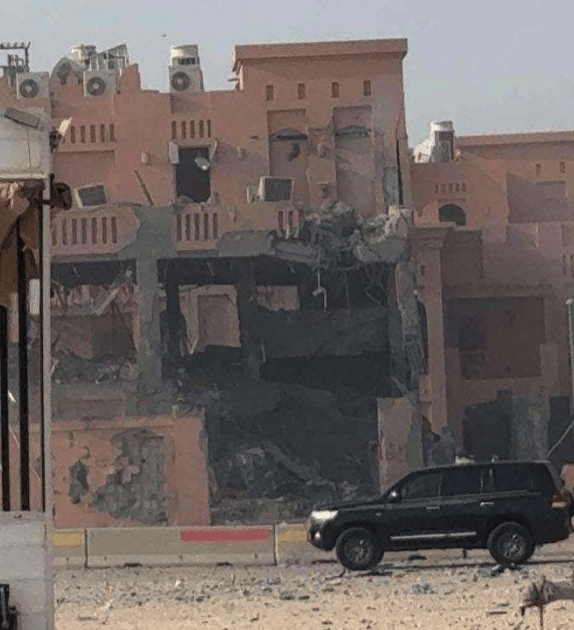
Iran kept up its missile attacks on Israel on Tuesday, with most of the projectiles intercepted but some cluster bomb munitions impacting throughout the country’s center, causing damage but no injuries.
The Israel Defense Forces said it struck a series of targets throughout Iran in several attacks, including overnight airstrikes on Tehran that killed top Iranian official Ali Larijani — the secretary of Iran’s National Security Council, whom the military called the Islamic Republic’s “de facto leader” — as well as the commander of Iran’s oppressive Basij force, Gholamreza Soleimani, the latter’s deputy, and several other top officials within the paramilitary force.
Iran fired at least 10 salvos of ballistic missiles at central, northern and southern Israel on Tuesday, as well as at Jerusalem, some carrying cluster bomb warheads.
No injuries were caused in the attacks. Medics treated several people hurt while headed for shelters or suffering from acute anxiety.
At least two missiles spread small bombs across central Israel in the afternoon, causing damage to homes, roads and a train station.
Footage showed small craters that were caused by at least seven impacts.
In Rishon Lezion, a car was flipped over and damage was dealt to a home.
The other missiles were likely intercepted or struck open areas, according to military assessments.
On Monday, Iran fired a total of seven missile salvos, with a few impacts damaging homes and an apparent cluster bomb injuring one person.
IDF hits series of Iranian regime targets
Besides the overnight strikes that killed the top officials, the IDF said Tuesday afternoon that it was striking regime infrastructure sites in Tehran, including members of Iran’s Basij paramilitary force and its checkpoints across Tehran.
It also said that on Monday, it carried out a series of strikes on military sites and infrastructure in Tehran, Shiraz and Tabriz. Dozens of Israeli Air Force fighter jets dropped dozens of bombs on various security headquarters, as well as sites used to store and launch drones, ballistic missiles, and air defense systems.
The IDF said the strikes were part of a “phase of deepening the blows to the core systems and capabilities of the Iranian terror regime.”
Israel has repeatedly said it is trying to weaken the regime to the point where Iranians could take to the streets to topple the leadership.
Iran’s state media aired footage Tuesday of pro-government demonstrations, including images of some men in plainclothes brandishing assault rifles and shotguns on the back of motorcycles — a sign of the government wanting to prevent renewed protests against the theocracy.
Iranian strikes pressure Gulf neighbors and oil markets
Iran kept up the pressure on the energy infrastructure around the region on Tuesday, hitting an oil facility in Fujairah, an emirate in the United Arab Emirates that has been repeatedly targeted. State-run WAM news reported that no one had been injured in the blast from the drone strike.
A man was killed by the debris of a missile intercepted over Abu Dhabi, the eighth person to die in the UAE since the start of the war, authorities said.
Iran’s attacks on Gulf nations and its grip on the Strait of Hormuz, through which a fifth of the world’s oil is transported, have sparked increasing concerns of a global energy crisis and are unnerving the world economy.
A handful of ships have crossed through the strait, and Iran has said the vital waterway technically remains open — just not for the United States, Israel and their allies. About 20 vessels have been struck since the war began.
With oil prices rising, US President Donald Trump said he had demanded that roughly a half-dozen countries send warships to ensure ships can pass through the Strait of Hormuz. But his appeals brought no immediate commitments, with many saying they are hesitant to get involved in a war with no defined exit plan and skeptical that they could do more than the US Navy.