The two cases before the justices involve more than 350,000 Haitians and about 6,000 Syrians whom the Trump administration has sought to expel from the United States, potentially forcing them to return to dangerous conditions in their home countries. The court’s ruling, expected in late June or early July, will also most likely have implications for more than one million people from other countries whose protections under the program the administration has sought to terminate.
The court’s three liberal justices posed tough questions to the administration with Justices Sonia Sotomayor and Ketanji Brown Jackson invoking the president’s rhetoric about immigrants and disparagement of Haitians, in particular, to suggest that the decision to end the program was racially motivated.
Several conservative justices seemed to embrace the Trump administration’s view that the text of the federal law that establishes the T.P.S. program makes clear that courts cannot second-guess the government’s decision to extend or to end the protections.
After nearly two hours of arguments, it seemed that the court’s decision could come down to the votes of Chief Justice John G. Roberts Jr. and Justice Amy Coney Barrett, who are often in the majority. But any victory for the migrants could be short-lived, merely requiring the administration to revisit its decision to terminate the program for the two countries — but allowing it to quickly withdraw the protections after a review.
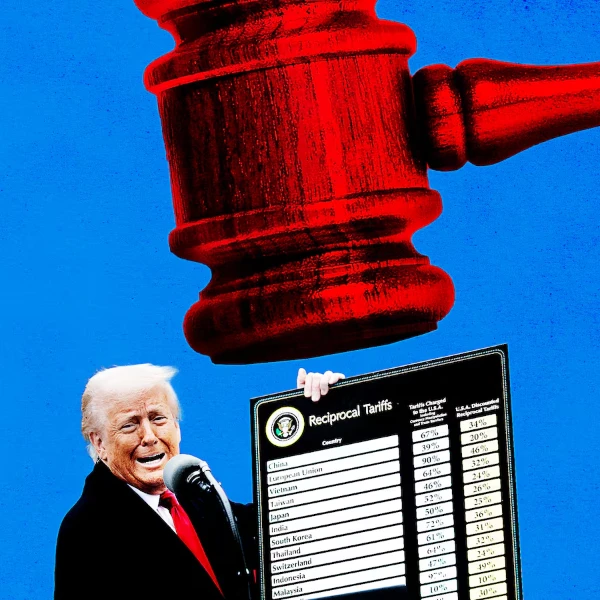
The justices fast-tracked the cases, scheduling them for the final day of arguments in a court term that began in October that already included challenges to other major aspects of Mr. Trump’s agenda. In February, the court ruled against the legality of the president’s sweeping tariffs, and the justices will soon decide whether Mr. Trump can end the longstanding guarantee of birthright citizenship for the U.S.-born babies of illegal immigrants and certain foreign visitors.
Like his birthright citizenship restrictions, the president’s plan to end T.P.S. protections is part of Mr. Trump’s broader effort to crack down on legal and illegal immigration.
At issue is a federal program created by Congress in 1990 with bipartisan support that gives the homeland security secretary authority to grant temporary refuge to citizens of countries affected by armed conflict, natural disaster or other catastrophes, if they are already in the United States.
The law allows the secretary to periodically review such protections, terminating or extending them for certain countries. It lays out that the secretary must consult with federal agencies, review conditions in a country, and then make a decision based on those assessments.
Lawyers for the Haitians and Syrians, who filed lawsuits in Washington and New York, said Kristi Noem, who until March 24 was the homeland security secretary, failed to take those steps. Instead, they accuse her of ending the programs based on political considerations and orders from the president.
The class-action lawsuits were filed by T.P.S. holders, including engineers, students, doctors and caregivers, who want to continue to work and live in the United States because their lawyers say they could be killed if they are forced to return to Syria or Haiti.
D. John Sauer, the solicitor general, told the justices that the courts have no authority to review the secretary’s decision-making steps. He pointed to the text of the statute, which prohibits “judicial review of any determination” of the secretary “with respect to the designation, or termination or extension of a designation.”
In each matter, the administration said the continuation of the protections would be “contrary to the national interest.”
Lower court judges, however, sided with the migrants, finding that the secretary’s decisions had been preordained and not based on meaningful analysis. The judges postponed the terminations, prompting the government’s lawyers to ask the Supreme Court to intervene.
In a separate case, the Supreme Court previously allowed the Trump administration to move forward with its plans to lift protections for more than 300,000 Venezuelans who had been living in the United States. The justices ruled twice in that case in emergency orders, providing technically temporary authorization to revoke the protected status while the case went through the courts.
But those orders did not include the justices’ legal reasoning, a common feature of the court’s so-called emergency or shadow docket, so it was unclear why the justices chose to handle the cases from Haiti and Syria differently by deciding to hold oral arguments and presumably issue a more formal opinion in coming months.
Both sides agree that the law allows the administration to remove countries from the T.P.S. program. But immigrant rights advocates are asking the court to order the administration to restart its review process for these countries to make new fact-based, good-faith assessments before ending protections for migrants from each.
In the Haiti matter, the lawyers said, the administration was also motivated by anti-black and anti-Haitian prejudice, in violation of constitutional prohibitions of discriminatory government actions. They cite the president’s false accusations during the 2024 campaign about Haitians in Springfield, Ohio, eating the pets of neighbors and his comments in December about Haitian immigrants being undesirable because they come from a “filthy, dirty, disgusting” country.
In response, the administration said the termination decisions were based on foreign policy and national security considerations. Mr. Sauer rebuffed the claim of unconstitutional racial discrimination, saying that the court should not consider campaign rhetoric and that the president’s quotes had been taken out of context.
“The president’s and secretary’s statements nowhere invoke race; they simply advocate for curbing illegal immigration, including from particular countries,” Mr. Sauer wrote in a court filing.
Haitians first received protections in 2010 after a devastating earthquake. The program has been extended several times, including by the Biden administration after the assassination of the country’s last elected president in 2021. Since then, Haiti has grappled with gang violence, political instability and food shortages.
Mr. Trump tried to end protections for Haitians in 2018, but was blocked by lower courts and those efforts stalled before the case reached the Supreme Court.
As for the Syrian migrants, the government initially put protections in place in 2012, citing the “extraordinary and temporary conditions” in the country resulting from “a brutal crackdown” by the nation’s president at the time, Bashar al-Assad. Those temporary protections were repeatedly extended, including during the first Trump administration, based on armed conflict and the aftermath of the 2023 earthquake.
To revive the city, Springfield’s leaders lured auto parts manufacturers, warehouses and other businesses to the area. But once the companies began operating, they struggled to find workers.
Then a wave of Haitian immigrants arrived, helping fill the labor shortage.
Now, many of those Haitians are facing a very uncertain future. The Trump administration wants to end Temporary Protected Status, a humanitarian program that has allowed about 350,000 Haitians, including thousands in Springfield, to live and work in the United States for years because of instability in their home country.
The program’s fate rests with the Supreme Court, which is hearing oral arguments on Wednesday to determine whether the administration has the legal authority to terminate it. A decision is expected by July. If the court rules in the administration’s favor, Haitians would lose their work permits and become subject to deportation.
Springfield, about an hour’s drive west of the Ohio capital, Columbus, could be reshaped by the Supreme Court’s decision.
A few years ago, word spread among Haitians that jobs were plentiful in Springfield. Thousands, some newly arrived to the United States after crossing the border, others relocating from states like Florida and New York, settled there.
“We Haitian people came, we began to work, pay taxes,” Mr. Charles said. “We helped this city develop.”
Between 10,000 and 15,000 Haitians live in the city of 58,000, according to county estimates.
The influx of newcomers initially caused friction. A local health clinic had to hire additional staff; schools had to accommodate new students; and some city services were strained.
Then during the 2024 presidential campaign, Donald J. Trump and his Ohio-born running mate, JD Vance, repeated a baseless claim — that Haitians in Springfield were eating their neighbors’ pets.
White supremacists descended on the city, bomb threats were made against schools and some Haitians moved to other cities. But many remained and carried on with their lives, said Heidi Earlywine, who mentors Haitian families and teaches them English at Central Christian Church.
Now, though, the Trump administration’s push to end T.P.S. has left many Haitians anxious and injected uncertainty into the local economy.
A Haitian exodus could derail Springfield’s momentum just as it rolls out “Springfield 2051,” a road map for the city ahead of its 250th anniversary.
While most employers have not spoken publicly, local and state officials have voiced concern about losing Haitian workers.
“We would have manufacturers and businesses that don’t have employees,” said Charlie Patterson, a commissioner in Clark County, which includes Springfield.
“They will be looking for workers for jobs they couldn’t fill before,” he said in an interview.
The Ohio governor, Mike DeWine, a Republican who has championed the contribution of Haitians, has warned that ending T.P.S. would be a “mistake.”
In early February, a federal judge in Washington paused the government’s termination of T.P.S. for Haiti, finding that the administration’s move had been “arbitrary and capricious” and had failed to consider the perilous conditions in Haiti. On March 6, a three-judge appellate panel affirmed that decision. Five days later, the Trump administration asked the Supreme Court to intervene.
Mr. Charles, 45, who worked at a telecommunications company in Port-au-Prince, fled Haiti after being threatened and imprisoned for his political opposition activities, he said.
After entering the United States in 2021 on a tourist visa, he qualified for T.P.S. under the Biden administration. He also applied for asylum, which, if granted, would allow him to remain in the country even if T.P.S. is revoked.
For now, he operates robots at a manufacturing plant and sends money to his wife and other family members in Haiti.
“They all depend on me,” he said. “We are here because our country is not functioning.”
But legal experts say the Haitians in Wednesday’s case face an uphill road in convincing a majority of the Supreme Court justices that the administration’s actions were driven by racial animus.
For one, the plaintiffs will have to persuade the court that Mr. Trump’s rhetoric, which did not directly mention race, was nevertheless about race and that it influenced Ms. Noem’s decision to end T.P.S. for Haiti.
Then there is the Supreme Court itself. In a range of cases, including on voting rights and immigration enforcement, the conservative supermajority has not been receptive to legal arguments that assert that race should be a consideration.
During the oral argument on Wednesday, Justices Sonia Sotomayor and Ketanji Brown Jackson said Mr. Trump’s statements about Haitian and other immigrants showed racial animus.
A group of legal scholars hopes to persuade the court that Mr. Trump’s language should be considered, and pointed to a district court judge’s finding in February that said the Trump administration had been motivated, at least in part, by racial animus.
“When a President repeatedly uses racial dog whistles across multiple different contexts, he sets a clear — if implicit — policy directive that he expects Executive branch agencies to execute,” reads the brief. Its authors include Kristen Clarke, the assistant attorney general for civil rights under President Joseph R. Biden Jr.
In their own legal filings, Trump administration lawyers have rebuffed the claim of unconstitutional racial discrimination, saying the termination decisions by Ms. Noem were based on foreign policy and national security considerations.
“The president’s and secretary’s statements nowhere invoke race; they simply advocate for curbing illegal immigration, including from particular countries,” wrote D. John Sauer, the solicitor general.
Mr. Trump’s rhetoric has previously been at issue in a case before the Supreme Court. In 2018, during his first term, the court heard a challenge to the administration’s travel ban on people from predominantly Muslim countries. The justices had to consider how much weight to give statements Mr. Trump had made during his campaign, when he said he was calling for a “shutdown of Muslims” coming into the country.
The court ultimately voted 5 to 4 to uphold the ban, saying the president’s power over the nation’s borders was not diminished by Mr. Trump’s history of incendiary statements about Muslims. Chief Justice John G. Roberts Jr. acknowledged the president’s many statements, but said the comments had to be balanced against the executive branch’s authority over national security.
Dissenting, Justice Sonia Sotomayor quoted many of Mr. Trump’s anti-Muslim statements and said that no matter how much the government tried to “launder” the statements, “all of the evidence points in one direction.”
The administration’s push to dismantle the humanitarian program is facing a major test on Wednesday as the Supreme Court weighs efforts to end T.P.S. for Haiti and Syria. The law gives the homeland security secretary the authority to terminate T.P.S. designations without court review.
Lawyers challenging the administration argue that officials violated proper procedures for assessing country conditions. They also contend that the terminations were politically motivated and meant to advance the president’s mass deportation campaign.
Legal challenges to T.P.S. terminations have become more common under the Trump administration, in part because of its rhetoric criticizing the program, said Dara Lind, a senior fellow at the American Immigration Council, a research and advocacy group.
“Before 2017, when a T.P.S. designation was terminated, there wasn’t a lot of suspicion that it was being terminated for reasons that had nothing to do with country conditions,” Ms. Lind said. “Part of it was because the administration wasn’t coming in and saying, ‘We don’t believe that this should be extended indefinitely.’”
Between 1990 and 2017, the federal government terminated T.P.S. for foreign nationals from 12 countries and territories: Angola, Bosnia and Herzegovina, Burundi, Guinea, Guinea-Bissau, Kosovo, Kuwait, Lebanon, Liberia, Montserrat, Rwanda and Sierra Leone, according to a Congressional Research Service report.
The reasoning behind some of those terminations was relatively clear. “Some were so obvious that the emergency no longer existed,” said Muzaffar Chishti, a senior fellow at the Migration Policy Institute, a nonpartisan think tank.
For instance, the Obama administration granted T.P.S. to Liberia, Guinea and Sierra Leone in November 2014 after the Ebola outbreak in West Africa. Although the designations were extended, the administration announced plans in late 2016 to terminate those programs after the outbreak subsided.
In other cases, administrations have conceded that some countries still had unstable conditions at the time of termination.
The Clinton administration granted T.P.S. to Angola in 2000 amid its longstanding civil war. The Bush administration ended the designation in March 2003, saying it was no longer needed after Angola’s warring generals reached a peace deal following the death of the rebel leader Jonas Savimbi. But the administration also cited reports that found that the country lacked housing, medical services, water systems and other basic services that were destroyed by the war.
Still, the Bush administration justified the move by saying that many displaced people had already returned to the country, and Angola’s government was working with international groups to return millions of displaced people to their homes.
The next month, the researcher wrote that her supervisor removed data from a report she was preparing that showed no Haitians were flagged in government databases as known or suspected terrorists, because it did not support the administration’s argument.
The T.P.S. program allows the homeland security secretary authority to grant temporary refuge to citizens of countries affected by armed conflict, natural disaster or other catastrophes, if they are already in the United States. The law also allows the secretary to revoke the protections, provided the administration consults “with appropriate agencies” and prepares a report, evaluating that conditions have changed in a country such that the protections are no longer needed.
As part of compiling that report, the emails show that Ms. Holland warned that manipulating the data “is not our job and will open us — and the Haiti decision — up to litigation.”
Such litigation is now before the Supreme Court. On Wednesday, the court will hear arguments about whether Kristi Noem, then the leader of the Homeland Security Department, violated the law when she announced last November that Haitian immigrants would lose protections. The court will also consider the legality of the administration’s attempt to revoke T.P.S. for roughly 6,000 Syrians in the United States.
The plaintiffs who brought the initial lawsuits argue that the administration failed to follow the process laid out by statute, and that its attempts to characterize Haitians as potential terrorists and criminals are undermined by years of vituperative and sometimes racist attacks on the group by President Trump himself.
The internal emails became public earlier this month as part of a separate lawsuit in Federal District Court for the Northern District of California. Andrew Tauber, one of the lawyers representing the respondents in the Supreme Court case, said they showed Ms. Noem’s notice to be “pretextual backfill to justify a preordained decision.”
The emails were produced in discovery and filed in court by the parties suing over the program’s cancellation. The emails were then submitted to the Supreme Court, attached to a letter from Mr. Tauber to the clerk of the court and are now part of the cases’ docket before the high court.
It is not clear how other officials responded to Mr. Holland’s concerns at the time.
U.S. Citizenship and Immigration Services referred a request for comment to the Justice Department, which did not respond to a request for comment about the emails.
In a filing to the Supreme Court following the disclosure of the emails, the government asserted that Ms. Noem’s consultations with the State Department and U.S.C.I.S. met statutory requirements, and that she independently considered conditions in Haiti when deciding if extending T.P.S. was in the national interest. The filing disputed the claim that her decision was “predetermined” and ordered up by the president.
After years of spiraling gang violence in Haiti, a U.N.-backed force created to quell it began arriving this month. In an official public notice of the termination of T.P.S. for Haitians, Ms. Noem acknowledged that “the current situation in Haiti is concerning” but argued that the United States “must prioritize its national interests.”
Ms. Holland did not respond to requests for comment. A database of federal workers identifies her as a senior-level employee at the Homeland Security Department, of which U.S.C.I.S. is one part.
It is unusual for parties to submit evidence like the emails to the Supreme Court outside of traditional court briefings, but the practice has become more common, particularly in fast-moving cases like these.
Appeals courts like the Supreme Court are generally not supposed to consider facts or allegations that were not part of the record in the lower courts. In this case, since the justices agreed to intervene in the matters before the circuit courts had ruled on the underlying lawfulness of the administration’s move, lower courts have not considered or evaluated the emails. It is unclear whether they will factor into Wednesday’s arguments or the justices’ deliberations.
Court records show that U.S.C.I.S. wrote a 13-page report to support the decision to revoke T.P.S. for Haitians. It called T.P.S. “a likely pull factor” driving an influx of Haitians to the United States, despite Ms. Holland’s assertion that the claim was unsubstantiated.
As evidence, the report cited a 2021 article written for the nonprofit Migration Policy Institute, which stated that “misinformation” about President Joseph R. Biden Jr.’s extension of T.P.S. protections and the general availability of legal status in the United States “may have been one factor for migrants trying to reach the U.S. border.”
Ann E. Marimow contributed reporting. Kitty Bennett contributed research.