Israel said Monday that the head of Hezbollah’s intelligence arm was killed in an overnight strike and Beirut said it would ban the terror group’s military activities, hours after the Iran-backed organization fired rockets and drones at Israel, leading to major retaliatory strikes overnight and throughout Monday.
The Israel Defense Forces confirmed that the overnight strike in the Lebanese capital killed Hussein Makled, whom it called “the head of Hezbollah’s intelligence headquarters.”
The military said Makled was responsible for “forming the intelligence picture using various intelligence collection tools to provide the Hezbollah terror organization with intelligence assessments regarding IDF troops and the State of Israel.”
“He also closely cooperated with senior commanders in Hezbollah who planned and advanced terror attacks against Israel and its citizens,” the IDF added.
The terror group’s overnight attacks — which it said were in retaliation for the killing of Iranian supreme leader Ali Khamenei in the opening minutes of the joint Israeli-US assault on Iran on Saturday — led to waves of Israeli airstrikes across Lebanon, including in the capital.
One overnight strike in southern Beirut killed a senior commander in Palestinian Islamic Jihad’s al-Quds Brigades. The terror group identified him as Adham al-Othman, 41, and described as “commander of al-Quds Brigades in the Lebanese arena.”
Later Monday, the IDF carried out a wide wave of airstrikes across southern Lebanon, after it issued evacuation warnings to Lebanese civilians. According to the military, it struck some 70 Hezbollah weapon depots and rocket launching sites.
The military also carried out a major wave of strikes against branches of the Al-Qard al-Hasan association, which the IDF said is used by Hezbollah to store money, manage salaries for its operatives, transfer funds from Iran, and purchase weapons.
“Hezbollah’s attempts at economic rehabilitation and the activity at the branches of the Al-Qard al-Hasan association constitute a threat to the citizens of the State of Israel,” the IDF added.
Lebanon bans Hezbollah’s military activities
In a statement after a cabinet meeting Monday, Prime Minister Nawaf Salam said Lebanon rejected any military actions launched from its territory “outside the framework of its legitimate institutions and affirmed that the decision of war and peace is exclusively in its hands.”
This “necessitates the immediate prohibition of all Hezbollah’s security and military activities as being outside the law, and obliging it to hand over its weapons to the Lebanese state,” he said.
Salam ordered the military and security agencies to take “immediate measures” to implement the cabinet decision and prevent “any military operation or the launching of missiles or drones from Lebanese territory.”
It was the latest effort by Lebanon’s leadership to assert its authority over Hezbollah, which it has been seeking to disarm ever since the start of its ceasefire with Israel in November 2024.
Responding to the Lebanese government’s decision to ban its military activities, a top Hezbollah parliamentary official condemned Beirut’s “swaggering decisions,” saying that “the Lebanese were expecting a decision rejecting the (Israeli) aggression.”
On Saturday, upon the beginning of Israeli and American operations in Iran and the subsequent retaliatory fire from Tehran, Salam had warned that Lebanon refused to be dragged into war.
And after Hezbollah on Sunday promised to take action against Israel and the US, President Joseph Aoun reiterated that “the decision of war and peace rests solely with the Lebanese state,” in a plea for the terror group to remain on the sidelines, as it had done during the previous 12-day war between Israel and Iran in June 2025.
But the request fell on deaf ears as Hezbollah moved ahead with its attack, the first time that the Iranian proxy had fired at Israel since the US-brokered ceasefire between Israel and Lebanon came into effect.
In the wake of the attack, Defense Minister Israel Katz said on X that Hezbollah’s chief Naim Qassem was now “a marked target for elimination.”
Katz warned that Israel would send Qassem to “the depths of hell” like Iran’s Khamenei.
“We will strike Hezbollah hard, and Naim Qassem, chairman of the Hezbollah terrorist organization, will discover that whoever follows Khamenei’s path ends up like Khamenei — in the depths of hell,” Katz said during a visit to the Israeli Air Force’s underground command center at the military’s headquarters in Tel Aviv.
IDF chief says campaign against Hezbollah to continue until ‘threat from Lebanon removed’
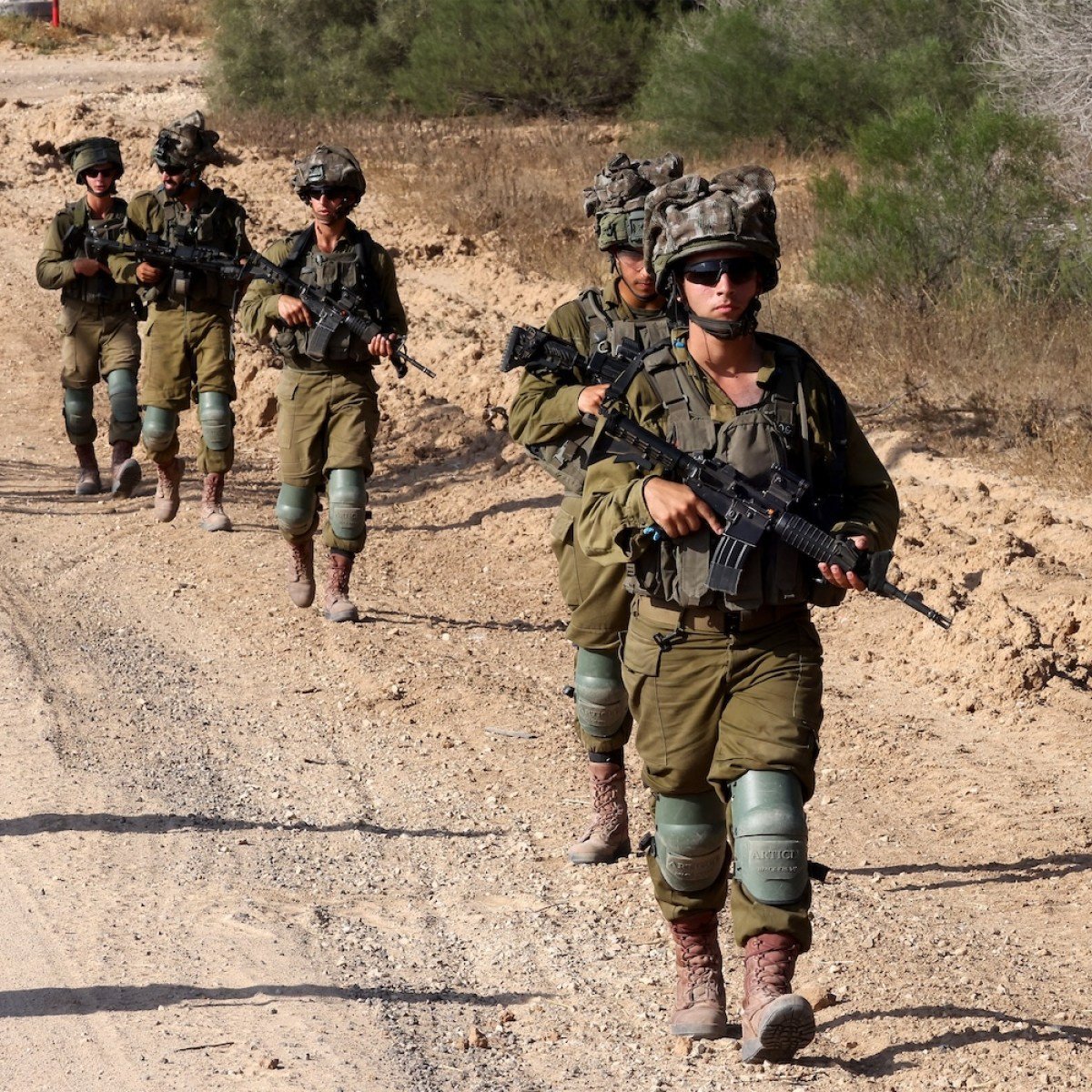
Speaking to officers on the northern border on Monday, IDF Chief of Staff Lt. Gen. Eyal Zamir said the military “insists” that Hezbollah be disarmed, and Israel would not end its new offensive against the terror group in Lebanon until “the threat is removed.”
“Our main effort is Iran. We are operating with force and striking the terror regime, in unprecedented cooperation with the United States military. After Hezbollah opened fire, I instructed that we act forcefully against Hezbollah as well. The IDF planned and is prepared to operate in multiple arenas simultaneously,” Zamir said during an assessment on the border, according to remarks provided by the IDF.
“The Lebanese government and the Lebanese army have recently been warned many times to disarm Hezbollah — they did not act. We will end the campaign not only with Iran harmed, but with Hezbollah also sustaining a very severe blow,” he said.
Zamir said the IDF “will continue to insist that Hezbollah be disarmed. This is a demand we will not give up on.”
“The IDF will not end the campaign before the threat from Lebanon is removed,” he continued.
Zamir added that the IDF’s offensive plans against Hezbollah “have been ready for a long time, and we will seize the opportunity.”
The IDF said that Zamir briefed Northern Command chief Maj. Gen. Rafi Milo and the commanders of the IDF’s divisions deployed to the area during the visit.
Meanwhile, IDF Spokesman Brig. Gen. Effie Defrin said, “All options are on the table,” when asked about a potential ground offensive against Hezbollah in Lebanon.
“The chief of staff was on the northern border, met with division commanders and the commanding officer of the Northern Command, briefed them, and approved plans,” he said in response to a question at a press conference Monday night. “The bottom line is that all options are on the table. We will work to disarm Hezbollah from its weapons and remove threats to Israeli citizens.”
At an earlier press conference, Defrin threatened the terror group. “Hezbollah opened fire. It chose to start a campaign. It will pay a heavy price,” he said.
In addition to Hezbollah’s rocket and drone fire on Israel in the pre-dawn hours of Monday, Senior Cypriot officials said that an overnight attack on a British airbase on the Mediterranean Island was likely carried out by the Lebanese terror group.
The officials said that an Iran-made Shahed drone hit the RAF’s Akrotiri base, causing limited damage and no casualties. The UK said the strike damaged the runway.
Later Monday, two more drones were detected heading toward Akrotiri, triggering sirens and a scramble of aircraft, though they were intercepted, a Cypriot spokesperson said.
Also in Israel on Monday afternoon, the IDF said that a drone launched from Lebanon was intercepted by the Israeli Air Force over northern Israel. Sirens had sounded in several communities in the Upper Galilee during the incident.
There was no immediate claim of responsibility by Hezbollah.
Amid the renewed conflict, Lebanese authorities announced the opening of displacement shelters in dozens of schools in Beirut, the south, and Mount Lebanon.
During the last war, the government’s shelter network was wildly inadequate for the scale of the displacement.
In the coastal city of Sidon, the gateway to south Lebanon, hundreds of northbound cars piled with mattresses, blankets, and children’s schoolbags crammed both sides of the two-way highway.
Lebanon’s health ministry said at least 31 people were killed in the Israeli strikes since the early hours of Monday, without differentiating between civilians and members of Hezbollah.