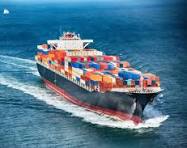
The first attack against a ship in the Strait of Hormuz occurred on Sunday morning.
Oman's Maritime Security Centre announced that an oil tanker named Skylight, flying the flag of the Republic of Palau, was targeted around five nautical miles (9.26km) north of Khasab Port.
In a statement shared on X, Oman authorities confirmed that there were 20 crew members on board, including 15 holding Indian nationality and 5 of Iranian nationality, and they were all evacuated.
Preliminary information also indicates that at least four people were injured and have been transferred to receive medical treatment.
It has not been specified who attacked or what hit the vessel, but the incident follows the declaration from Iran's Islamic Revolutionary Guard Corps (IRGC) that the Strait of Hormuz is closed to international navigation, on Saturday.
The Palau-flagged oil tanker is reportedly under US sanctions.
Oman authorities also stated that the port of Duqm was targeted by a drone attack.
The country was serving as a mediator between Tehran and Washington in recent nuclear talks.
Strait of Hormuz
Following the US and Israeli strikes on Iran, which killed Supreme Leader Ayatollah Ali Khamenei and prompted Iranian missile retaliation, the IRGC issued radio warnings declaring the Strait of Hormuz effectively closed, stating no ships are allowed to pass.
While Tehran has not made a formal announcement of a full blockade, the threats have triggered immediate disruption. Ship traffic has plummeted with vessels holding outside the Gulf of Oman or executing U-turns mid-transit.
Most major shipowners and operators have suspended operations through the Strait of Hormuz. Namely, the Danish shipping and logistics giant, Maersk, has suspended all future transits through the Strait of Hormuz until further notice, on Sunday afternoon.
Marine insurers have also halted coverage for any voyages in the area, leaving transporters exposed to massive risk premiums or outright refusal.
Specific examples include the very large crude carrier KHK Empress, partially loaded with Omani crude, and the Desh Abhimaan sailing under the flag of India, both of which turned back.
The global oil market
Oil futures reopen for trading this Sunday evening amid widespread talk of Brent crude hitting $100 per barrel, levels last seen after Russia’s invasion of Ukraine in 2022.
Analysts at Barclays, among other firms, have explicitly raised forecasts to that threshold, warning that a prolonged halt could block up to 20 million barrels per day, which represents about 20% of global supply.
Eight OPEC+ countries, Saudi Arabia, Russia, Iraq, UAE, Kuwait, Kazakhstan, Algeria and Oman, met virtually on Sunday, to review global market conditions and outlook.
In a press release, they announced a small increase of oil output by 206,000 barrels per day starting in April.
The statement also informed that the eight OPEC+ countries will "hold monthly meetings to review market conditions, conformity and compensation" with the next conference scheduled for 5 April.
No kinetic Iranian naval blockade has materialised yet, but the practical shutdown and insurance void have created extreme volatility.
Ship tracking monitors show the large majority of traffic stalled on either side, and any further escalation or de-escalation will dictate the market reaction.