Evacuation flights out of the Middle East have ramped up with thousands leaving the region as the US-Israeli war with Iran continues to cause aviation chaos.
Here’s the latest on evacuation flights:
US evacuation: The first US evacuation flight left the Middle East after the Trump administration faced backlash for not having an evacuation plan ready. More than 17,500 US citizens have returned home from the Middle East since February 28.
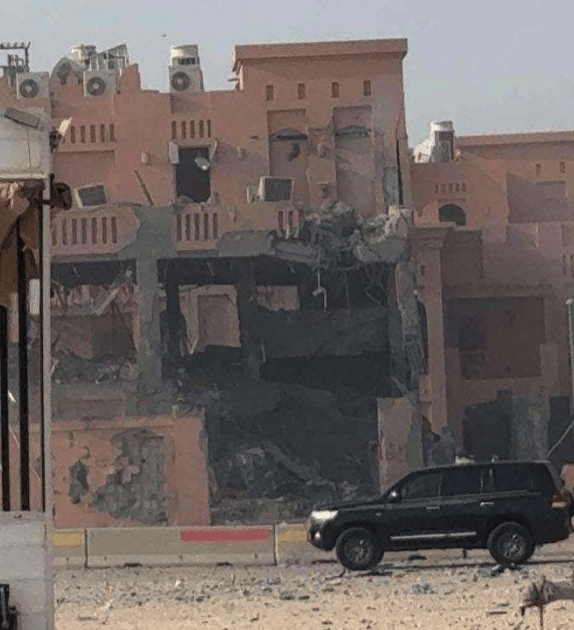
US diplomats told to leave: The US authorized non-emergency staff and their families to depart several Middle Eastern countries, and Qatar authorities are evacuating residents living near the US Embassy, after Iranian strikes this week targeted US facilities across the region.
Israel to reopen airport: Israel will begin gradually reopening its main international airport today for incoming flights. Evacuation flights have also departed other regional hubs, including Dubai and Jeddah.
Canada: Canadian nationals in Israel will be bused to the Egyptian border. In Beirut, limited numbers are being put on planes. The government is also trying to arrange charter flights out of the UAE as the airspace begins to open, Canadian Foreign Minister Anita Anand said.
European efforts: The British foreign minister said the UK is working with airlines to boost evacuations, while France, Germany, Italy and the Czech Republic have also begun arranging flights out of the region.
Reunited: After days stranded in Dubai, some of the first passengers arrived home after airlines including Emirates and Virgin Atlantic resumed limited flights from the United Arab Emirates to cities such as New York, London, Paris, and Sydney.
Rest of the world: Several countries have recommended their nationals shelter in place or leave the region. Japan said it will transport its citizens residing in Kuwait, Bahrain, Qatar, and the UAE by land to Riyadh and Muscat, where airports remain operational. India and Australia have also repatriated some of its nationals.
Explosions rocked Tehran again this morning leaving more residents unsure whether to leave or stay put, a man who fled the city told CNN.
Loud bangs were heard in the Iranian capital Thursday morning, the semi-official state news agency Tasnim reported.
The man – who fled Tehran with his wife, a doctor, a few nights ago – described the uncertainty of living under continuing attacks. “You never know what or who is a target.”
Earlier this week, a TV and radio antenna near their home was hit, shaking the entire neighborhood.
Now they are settled in a small town near Damavand, Iran’s tallest peak, he said the nights are filled with the sound of fighter jets, though no impacts have reached their area.
“A lot of friends and family are staying put in Tehran for now, because the thinking is no matter where you go, something there will be targeted,” he said.
Heading south means fearing foreign forces at the borders, while going north risks getting trapped on the congested Chalus highway, he added. “Many people are thinking it’s better to just stay where you are.”
The US submarine sinking of an Iranian warship in international waters has raised uneasy questions for key White House partner New Delhi, an analyst said, as the vessel was destroyed shortly after leaving an Indian port where it had completed joint naval exercises.
Sri Lanka’s foreign minister identified the vessel as the IRIS Dena. The frigate had been sailing home from an east Indian port, following a visit where it was welcomed by the Indian Navy last month. Over 80 people have been confirmed killed.
The attack took place in the Indian Ocean, thousands of kilometers away from the Gulf, where US and Israeli forces are striking Iran, and Tehran is retaliating with missile and drones.
It was the first time a US attack submarine had used a torpedo to sink a combat ship since 1945.
Why it matters for India: While the incident took place in international waters, it will likely rankle New Delhi because the attack took place in an area of ocean that India views as its backyard and it had only finished hosting the crew.
He noted that while the Iranian ship was in international waters, it was “going from an Indian fleet review, through what is not an active war zone, and definitely an area of India’s influence.”
India’s “non-negotiables” are “protecting commerce and energy routes, avoiding entanglement in US–Iran escalation, and preventing any normalization of third‑party kinetic actions so close to its maritime periphery,” he added. “All of them have been challenged by the US naval action,” Singh said.
India hasn’t publicly commented on the incident. CNN has reached out to its foreign ministry and navy for a response.
As it enters its sixth day, the latest Middle East conflict continues to disrupt travel, rock markets and endanger civilians.
White House press secretary Karoline Leavitt reiterated the US goals to destroy the regime’s ballistic missile program, “annihilate” Iran’s naval presence in the region, dismantle Iran’s terrorist proxies and prevent it from pursuing a nuclear weapon.
She didn’t rule out that the US carried out the strike on a girls’ elementary school in southern Iran that killed more than 150 girls, but insisted the US military “does not target civilians.”
Here are the latest headlines:
Overnight strikes: Israel launched its 11th wave of attacks against Iran since the conflict began, with flyover strikes across Tehran overnight into Thursday, targeting military infrastructure. Israel also said late Wednesday it has again started striking Hezbollah infrastructure in Beirut, without providing details. Israel has battered parts of the country all week, after the Iran-backed military group fired projectiles from Lebanon into Israel.
Iran strikes back: Iran launched a drone attack on an Amazon data center in Bahrain, a state-affiliated Iranian news agency said. It also launched a fresh barrage of missiles toward Israel overnight into Thursday. It also continues to fire at neighboring Gulf states, which are armed with American weapons and air defenses, although the US said the pace of Iran’s aerial assaults has slowed.
Warship torpedoed: A US submarine sank an Iranian warship in international waters off the coast of Sri Lanka on Wednesday, killing at least 87 people, according to Sri Lankan officials.
Tanker leaking: The crew of an oil tanker anchored off Kuwait reported seeing a large explosion on the vessel’s left-hand side before a small craft left the area, a British marine tracking agency said Wednesday.
NATO interception: NATO air defense systems shot down an Iranian missile traveling towards Turkey’s airspace. This is believed to be the first time NATO forces have intercepted an Iranian missile traveling towards a member country since the conflict began.
US soldiers identified: The Pentagon publicly identified the two remaining service members killed in a drone attack in Kuwait on Sunday. The other four soldiers killed were previously identified on Tuesday.
Miserable evacuation: Many residents in southern Lebanon have embarked on grueling journeys after Israel ordered them to evacuate; some displaced families have been forced to sleep on the streets at night. And many Tehran residents fled to the countryside, while those who remain shelter at home, living in fear of constant bombardment.
Senate vote: Republicans rejected a resolution Wednesday that would have reined in US President Donald Trump’s war powers.
Canada involvement: Carney has said that Canada will not participate in the US military action in Iran, but when pressed as to whether he’d rule it out – even if the conflict broadens – Carney said anything was possible.
Iran-Kurdistan call: The president of Iraq’s autonomous Kurdistan Region and the Iranian foreign minister pledged “cooperation,” according to a readout from the Iranian Foreign Ministry. Their call comes a day after CNN reported that the CIA is aiming to foment rebellion in Iran by arming Iranian Kurds and sending them over the border from Iraqi Kurdistan.
Read our full catch-up here.