Despite dozens of UK lawmakers are publicly urging Keir Starmer to step down as prime minister, but no potential contender has yet mounted a formal leadership challenge against him.
Just a handful of names are thought to be capable of mustering the required support of 81 lawmakers to trigger a leadership contest.
Here’s a look at who they are.
Wes Streeting
Health Secretary Wes Streeting, who was tasked with repairing Britain’s depleted National Health Service (NHS), has long been considered the moderate future of Labour and is praised as one of the government’s most effective communicators.
But he has been harmed by his friendship with Peter Mandelson, the veteran Labour politician who was fired as Britain’s ambassador to Washington over his ties to Jeffrey Epstein, the convicted sex offender.
Andy Burnham
Most opinion polls show that Andy Burnham, the mayor of Manchester, is the most popular politician in Britain. Where Starmer is often accused of lacking a political vision, Burnham champions “Manchesterism” – a brand of business-friendly, “aspirational socialism” that seeks to put essential services back in public control and make life “doable” for ordinary Britons.
But Burnham is not a member of parliament (MP), so he cannot – yet – stand to be Labour’s next leader.
Angela Rayner
Angela Rayner, Starmer’s former deputy prime minister, is popular among many young Labour voters and old-fashioned socialists for her earthy, extroverted manner.
As Starmer’s deputy, and as housing secretary, Rayner was responsible for many of the policies of which the Labour government is most proud.
However, Rayner resigned as deputy last year following a scandal over her failure to pay enough property tax on a second home. She claimed her mistake was unwitting and based on poor legal advice, but her unresolved tax affairs could blight a bid to oust Starmer as leader.
Video Ad Feedback
Watch: British Deputy PM Lammy says Starmer has his “full support”
1:18 • Source: CNN
Watch: British Deputy PM Lammy says Starmer has his “full support”
1:18
British Deputy Prime Minister David Lammy says Keir Starmer has his “full support” as the Prime Minister faces growing calls to step down.
Speaking to reporters outside 10 Downing Street, Lammy said Tuesday that no rival contender appears to have enough support to challenge the prime minister for the leadership.
“It’s been 24 hours now, and nobody has come forward to put themselves forward in the processes that exist in the party. No one seems to have the names to stand up against Keir Starmer,” he said.
To trigger a leadership contest, 81 members of parliament (MPs) must coalesce around a single candidate. Once one or more candidates amass that level of support, their names can be put on the ballot to run against Starmer, in a contest voted on by Labour Party members.
The Labour Party holds 403 out of the total 650 seats in the British parliament, after Keir Starmer won a landslide general election victory in 2024.
Their huge mandate makes the party’s bleak local election results and a series of scandals appear that much worse, as some lawmakers within the party are expressing frustrations that Labour should be accomplishing more.
If the party wants to oust Starmer, then at least 81 of those 403 Labour MPs would need to unite around another leader.
At least 86 Labour MPs are now calling for Starmer to step down, the UK’s PA news agency has reported, but they have not yet coalesced around a challenger. Meanwhile, more than 100 Labour lawmakers also signed a letter warning against a party leadership contest, according to PA, which has seen the letter.
For context: The recent local elections have no impact on the national parliament majority – instead, they change the balance of local authorities and some mayoral offices. But the results are widely being viewed as a decisive condemnation of Starmer’s leadership.
In England, Labour lost 1,498 local council seats, while the right-wing Reform UK picked up 1,452 seats, which is remarkable considering the party only has eight MPs in the national parliament. The left-wing Green party also gained 441 local council seats and the centrist Liberal Democrats picked up 155, according to the national broadcaster the BBC.
Reform UK also made sizable gains in Scotland and Wales during the local elections. And in both nations, the pro-independence parties – the Scottish National Party and Plaid Cymru, respectively – won big in the elections for their devolved parliaments, delivering additional blows to Labour and Starmer.
Britain’s borrowing costs were already rising more than other major economies before a leadership crisis in the governing Labour Party helped push gilt yields to multi-decade highs earlier today. Borrowing costs could stay elevated, analysts warn, with negative consequences for anyone trying to buy a house or refinance an existing mortgage.
UK government bond yields have been rising more than elsewhere because the UK is more exposed to higher inflation — and thus interest rate hikes — as a result of soaring energy costs. Political uncertainty hasn’t helped either.
For context: bond yields rise when investors sell bonds, causing prices to fall, as they demand higher returns as compensation for expected higher interest rates or elevated credit risk.
Andrew Goodwin, chief UK economist at Oxford Economics, expects bond yields to stay “higher for longer.” That’s because increased government spending now looks more likely, as UK Prime Minister Keir Starmer attempts to “regain popularity” or as a possible successor implements “more costly left-wing economic policies,” he wrote in a note today.
Higher government borrowing costs will tighten financial conditions throughout the economy and “damage mortgage affordability,” he added.
Figures from data provider Moneyfacts show that while UK mortgage rates have dipped in recent weeks, they remain considerably higher than at the start of March.
Meanwhile, several analysts expect to see further pressure on UK gilt yields and the pound in the coming days.
“Increased (government) spending is a given, and so are higher taxes, almost certainly including higher taxes on wealth and housing,” said Kit Juckes, chief foreign exchange strategist at Société Générale. On top of geopolitical uncertainty, rising energy costs and weaker economic growth, “there isn’t much to make anyone feel good about the pound,” he added.
Video Ad Feedback
People in London react as Starmer resists calls to quit amid UK political turmoil
1:29 • Source: CNN
People in London react as Starmer resists calls to quit amid UK political turmoil
1:29
People in London, England have been reacting to UK Prime Minister Keir Starmer’s pledge to “get on with governing,” in the face of pressure from some in his own government to quit after a disastrous set of local election results.
“He inherited quite a difficult government at quite a difficult time, I’d say,” student Riyadh Rehman told the Reuters news agency. “I might also say maybe, as a Labour government, they don’t really embody those maybe left-wing values or socialist values that you would expect.”
Immigration officer Geoffery Worsdell said Starmer had tried to “keep everyone happy” since being elected.
“Even though personally I’m not a fan of his, but I think he’s been holding back the more sort of left radical side of his party for a while, trying to keep them at bay for various reasons,” he added.
You can see more reaction in the video above.
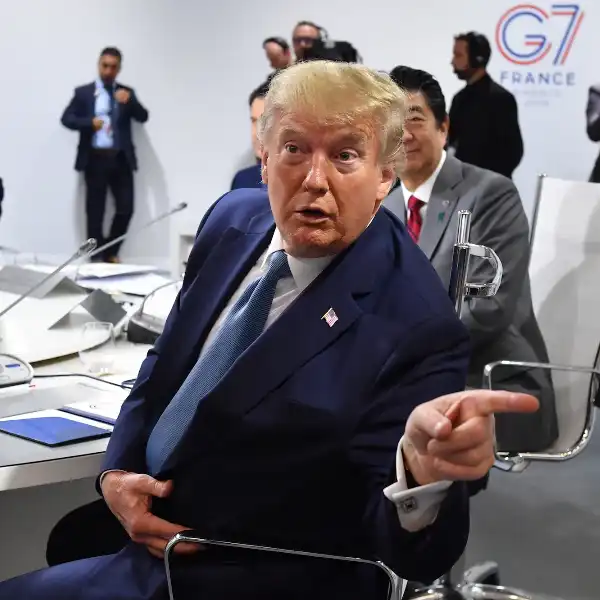
Even before last week’s local elections, British Prime Minister Keir Starmer was repeatedly criticized by his US counterpart President Donald Trump.
Since practically the beginning of the US and Israel’s war with Iran, Trump expressed his discontent with Starmer for not allowing the US to use British bases to launch attacks on the country.
The US leader blasted the UK as “very, very uncooperative,” and said that “this is not Winston Churchill that we’re dealing with” in reference to Starmer.
For his part, Starmer has defended his decision not to join the war, saying he was not prepared to join a conflict “without a plan to get us out.”
In mid-March, Starmer said he had “stood by my principles” and believed that “time will show that we have the right approach.”
Starmer was likely referring to Nigel Farage, the leader of the hard-right Reform UK party and an ally of Trump.
At first, Farage said the UK’s “gloves needed to come off” when dealing with Iran. As the war in the Middle East escalated, Farage backtracked, saying the UK should not get involved “in another foreign war.”
In April, Starmer said that his “position on the Iran war has been clear from the start. We’re not going to get dragged into this war.”
CNN’s Christian Edwards contributed to this reporting.
UK Prime Minister Keir Starmer swept to power almost two years ago on a ticket to revive Britain’s ailing economy and restore the fortunes of households whose living standards have deteriorated.
“Change begins now,” he declared following the Labour Party’s resounding victory at the general election in July 2024. But meaningful change has yet to be delivered — and the Labour Party is paying dearly for the delay, as highlighted by heavy losses in recent local elections.
On one measure that matters a great deal to voters, salaries have not kept pace with rises in consumer prices. Since the Labour Party came to office, average weekly pay, after adjusting for inflation, has inched up around 1% to £492 ($666), official figures show. UK inflation, meanwhile, has been stuck at or above 3% for the past year.
“The extent of Britain’s living standards slowdown is unprecedented in modern times,” the Resolution Foundation, a think tank, found in a report last year.
Labour’s pledge to build more houses to address a chronic shortage have not materialized and economic growth, although somewhat improved, has remained lacklustre at a little above 1%. Soaring energy costs because of the Iran war are expected to weigh on output: the International Monetary Fund expects the UK economy to expand by just 0.8% this year.
“The UK economy has been stuck in a cycle of sluggish growth for several years,” according to Caterina Batog, an analyst at the British Chambers of Commerce. “Productivity continues to lag behind other advanced economies, business investment remains weak, and political uncertainty has weighed heavily on business confidence.”
Of the Labour lawmakers calling for British Prime Minister Keir Starmer to step down, many are citing the party’s deep losses in the UK’s municipal, or local, elections last week.
Labour, which won a significant victory in the 2024 general election, lost nearly 1,500 seats in English councils, while the hard-right Reform UK party won a total of 1,454 seats in England.
Voters taking part in local elections choose local councillors, rather than representatives in the UK Parliament.
The Reform party, led by the populist Nigel Farage, aims to “restore Britain’s power, reward hard work, defend our culture, and put the British people first,” its website says.
The first four policies listed on Reform’s website relate to immigration.
“Illegal immigration is out of control,” the party says, vowing to “remove all illegal migrants from the UK” and “ensure that anyone who enters the country illegally will be ineligible for asylum.”
Reform also promises to “defend and protect British culture and traditions,” “dramatically cut foreign aid” and scrap environmental policies in support of British farmers, among other policies, should it get into power.
Following his party’s gains in the election last week, Farage said that Reform was no longer a “fluke or a protest vote,” but a “truly national party” that was “here to stay.”
A second British minister has just resigned from British Prime Minister Keir Starmer’s cabinet.
Jess Phillips, who served as Home Office Minister, posted her resignation letter to Facebook a short while ago.
Phillips, a staunch voice in a strategy to tackle Violence Against Women and Girls, expressed her gratitude to Starmer for his work on the issue, but also claimed that “real change and direction in this area usually came from threats made by me in light of catastrophic mistakes.”
The politician referenced action against online child sex abuse that she was pushing to become UK legislation, and claimed that Starmer did not work to enact this quickly enough. She did not explicitly mention the Labour Party’s losses at last week’s local elections in her letter.
Earlier today, Miatta Fahnbulleh, the Minister for Devolution, Faith and Communities, became the first of Starmer’s ministers to resign, saying that the prime minister’s government has not “acted with the vision, pace and ambition that our mandate for change demands of us.”
Almost 80 lawmakers from Starmer’s governing center-left Labour Party have also publicly called for him to resign or set a timetable for his departure.
It’s not unusual in British politics for leaders to suffer disastrous local election results after two years in office, before then winning a second term at the next general election.
The Conservative Prime Minister Margaret Thatcher lost more than 1,000 council seats across England in 1981 local elections, but was reelected in a landslide in the 1983 general election. Blair lost more than 1,000 council seats in 1999, before winning his second landslide in the general election two years later.
That’s in part because of the “protest vote” phenomenon of a multi-party system. Voters use the local elections to express frustrations with the national government or the current state of the party they typically support.
Last week’s UK local elections saw huge gains made by smaller parties — the hard-right Reform UK, the centrist Liberal Democrats and the left-wing Greens — which many political commentators note is a clear sign of frustration with the two more mainstream parties, Labour and Conservative.
British media is awash with accounts of voters citing anger over immigration as part of what spurred them to vote for Reform UK local councillors in protest, even though immigration policy is largely controlled by the Home Office and Border Force at the national level.
Other voters said they voted Green to express discontent with Starmer’s government for a range of reasons, including national issues like social benefits and immigration changes, as well as foreign policy issues in relation to Gaza.
Whether those voters coalesce around the two mainstream parties again in the next general election is an open question.
Green Party leader Zack Polanski said, in the wake of the local election results, that Britain’s two-party politics is dead. But some believe the walloping incumbents receive in local elections is just par for the course.
The Labour Party’s mutiny comes at an unfortunate time.
Tomorrow, hundreds of lawmakers will have to put their differences to one side as they gather in Westminster for the King’s Speech – a key event in the UK political calendar which marks the opening of a new session of parliament.
Sat on a throne in the House of Lords, King Charles III will read a speech that sets out the legislation that the government intends to introduce in the forthcoming parliament.
That speech will have been written entirely by the government, and approved by the cabinet – some members of which are now reportedly in open revolt against the Prime Minister.
Whether the imminence of the King’s Speech gives Keir Starmer staying power remains to be seen. None of his potential rivals have yet formally challenged his leadership.
Perhaps the prospect of having to play happy families in front of the monarch Wednesday morning will persuade those rivals to bide their time for another day.
Video Ad Feedback
UK Cabinet ministers leave Downing Street after meeting with embattled UK Prime Minister Keir Starmer
1:21 • Source: CNN
UK Cabinet ministers leave Downing Street after meeting with embattled UK Prime Minister Keir Starmer
1:21
More lawmakers from Britain’s governing Labour Party have taken to social media today to show support for Prime Minister Keir Starmer.
Many of them suggested that, if Starmer were to step down, it would cause further instability for the UK.
John Healey, the country’s Secretary of State for Defence, posted to X that “people are worried about current conflicts and looming global crises.”
Catherine Atkinson, who represents Derby North in the East Midlands, echoed this sentiment, writing on X: “We face a less safe world with global instability adding to cost of living pressures for households.
Preet Kaur Gill, MP for Birmingham Edgbaston, said she was “backing” Starmer “because voters did not elect us to turn inward and obsess over ourselves (but) they elected us to deliver change for working people.”
Bayo Alaba, who represents the constituency of Southend East and Rochford, wrote that last week’s election results were “beyond sad,” adding that “the task of fixing our country and communities is not easy or quick.”
Tulip Siddiq, who represents Hampstead and Highgate in London, wrote on X that “the last few days have been bruising,” but said that Starmer “is right to get on with the job. That is what the country expects of all of us.”
In Britain’s last general election just under two years ago, Keir Starmer led the country’s center-left Labour Party to victory for the first time in 14 years.
After his win, Starmer pledged a return to the politics of public service, vowing to heal the “weariness at the heart of the nation” with “action not words.”
The prime minister recently made another vow, pledging to “get on with governing,” despite some calls for him to step down following huge losses for Labour in last week’s local elections.
Starmer, 63, was elected as the leader of the Labour party in 2020, after Jeremy Corbyn, an avowed socialist, stepped down after a bitter defeat in the country’s 2019 general elections.
Starmer, more of a centrist than his predecessor, rose to prominence as a young activist lawyer before his career in politics.
Born in 1962, he grew up in a small town to the south of London. His father was a toolmaker who worked in a factory, while his mother was a nurse who suffered with severe physical disabilities, which ultimately led to one of her legs being amputated.
Starmer became Director of Public Prosecutions (DPP) in 2008, running the Crown Prosecution Service of England and Wales – a high-profile job for which he was knighted, making him the first ever Labour leader to enter the job with the prefix Sir to their name.