
On this page
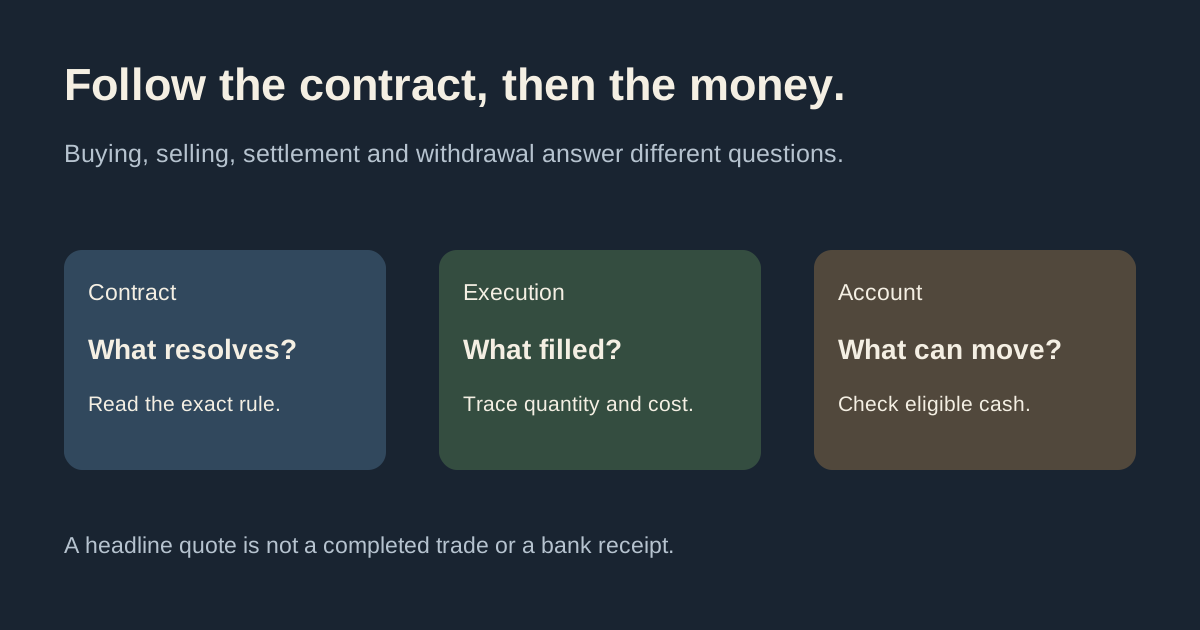
Kalshi Predictions lets users trade contracts tied to defined event outcomes. People often call this “Kalshi betting,” but the useful mechanics are the contract's purchase price, executable order, settlement rule and payout. Read those together rather than assuming the wording of a market title explains every condition.
Reviewed October 6, 2026. This is an educational, documentation-based guide to Predictions. Perpetual futures use a separate margin account and different mechanics. The examples are fictional, and we did not place a live account order to prepare this guide.
Read the exact event contract
Kalshi's portfolio documentation illustrates a simple binary contract paying $1 for a favorable settlement and $0 otherwise. Each contract's rules determine its actual settlement and payout.
Record the question, side, observation source, time window, threshold and treatment of equality or cancellation. Similar titles can refer to different observations. A sports score, a reported economic value and an averaged asset price need their own specified sources.
Use the settlement-rules guide to organize those checks. A market closing for trading is not necessarily the same moment that its outcome is finalized and credited.
Purchase cost, payout and profit
In a fictional $1-or-$0 binary contract, buying 50 contracts at 60¢ costs $30 before fees. A favorable settlement pays $50, leaving a $20 gain before fees. An unfavorable settlement pays $0 and loses the $30 purchase cost before fees. Neither result is guaranteed by the displayed price.
A price can be used as a market-implied probability shorthand, but it is also an executable quote with a side, quantity and timestamp. Spreads and depth matter. A headline quote does not establish that your whole order can trade at that price.
Use the profit calculator to compare assumed entry cost and payout, and the slippage calculator to explore multiple price levels. Keep assumptions separate from an actual venue order quote.
Before submitting an order
- Confirm your product and account eligibility using current venue terms.
- Read the exact contract and side you intend to buy.
- Check the order type, permitted price, quantity and estimated fees.
- Review available depth and the possibility of partial or no fills.
- If you choose to submit, save the reference and inspect completed fills.
- Reconcile cash, positions and any unfilled order remainder.
The order-book guide explains bids, asks and resting quantities. An order acknowledgement is not the same as a filled position. A minimum or maximum acceptable price controls the quote you permit; it does not create a buyer or seller.
Can you cash out before the event resolves?
You can review a sell request for a Predictions position before settlement, subject to its trading and account rules. The official portfolio guide says selling needs buyers at allowed prices and can fill fully, partly or not at all. Existing orders and collateral requirements can affect the sellable amount.
The early cash-out guide has a worked partial-sale example. Selling produces cash only for the portion that executes. It does not automatically send that cash to a bank.
For an external payout, use the withdrawal guide and check the account's available amount. Portfolio value, cash, nonwithdrawable credit and eligible withdrawals are different figures.
Fees: use the current schedule and order quote
Open the current fee schedule and review the actual quote for the market and order type. This guide does not assert a universal flat per-contract fee. Trade fees, spread, payment costs and incentives should not be combined under a vague “no house edge” claim.
Keep entry and exit costs in the same calculation. A strategy that appears positive before fees can have a different result after execution costs and losing positions. A reward credit is also separate from trading profit.
Kalshi, sportsbooks and other prediction markets
| Question | What to compare |
|---|---|
| Is this the same event exposure? | Outcome wording, source, observation time and settlement conditions |
| What would the order cost? | Executable price, filled size, fees and entry/exit depth |
| Can I use this product? | Current location, verification and account requirements |
| How does money leave the account? | Available cash, method eligibility, holds and payout instructions |
Read the Kalshi-versus-Polymarket comparison for platform distinctions, including US versus international accounts. A difference between two Yes prices alone is not an arbitrage proof. Complementary outcomes, matching rules, fees, capacity and both completed fills matter; see the arbitrage guide.
Availability and regulatory context
Kalshi's official help page states that it is subject to CFTC oversight. That fact does not settle every geographic or product-access question and does not guarantee returns. Check the current venue rules and the account's location/verification messages for your intended product.
This guide does not treat a fixed state count or another venue's historic restriction as a current universal access rule. When a required condition is unclear, resolve the specific question through the official help center before funding or trading.
Records, taxes and support
Keep transaction and fill records for the period you are assessing. Kalshi's tax-documentation page describes forms tied to reporting thresholds and a P&L statement that includes fees and rebates. It notes monthly updates, so a mid-month statement may omit the latest trades.
Do not infer a universal tax category or a favorable deduction rule from the word “betting.” Follow the current documents applicable to your activity and obtain qualified tax advice for your own return.
The support guide explains the signed-in messenger and fallback route for account questions. For a documentation-based product assessment, see Kalshi reviews. Alphascope's research tools help investigate events; the venue's contract and final order quote govern the trade.