
On this page
If a Kalshi deposit is not working, first identify its method and actual status. A declined card payment, pending bank transfer, partial immediate credit and delayed withdrawal eligibility are different situations. Record what Kalshi's Transfers screen and your payment provider show before deciding what to do next.
Reviewed October 6, 2026 against the official method-specific help pages linked below. Availability, fees, limits and account-specific conditions can change. This guide explains the documented flow; it is not a completed account-funding test or a promise that a payment will succeed.
Kalshi deposit methods compared
The Transfers FAQ lists methods and account limits. Confirm the options actually shown for your account rather than assuming every method is available in every region.
| Method | Documented condition | What to verify |
|---|---|---|
| Bank transfer / ACH | US users; $10 minimum; full settlement typically within five business days | Pending status versus any immediate credit |
| Debit card | $10 minimum; deposits may incur a 2% processing fee | Cardholder details, issuer approval and final quote |
| Wire | $1,000 minimum; matching sender name and account memo required | Current official instructions and receipt time |
| Crypto | Supported asset/network and account-specific provider limit | Selected network, transaction hash, fees and confirmation status |
| Real-time payments / RTP | Participating US bank; matching sender and memo required | Bank support and attribution status |
Use the method sections below for the source behind each row. A method's stated timing is not an account-specific completion guarantee.
ACH: pending transfer is different from immediate credit
Kalshi's bank guide lists typical settlement within five business days, excluding weekends/holidays, no bank-deposit fee and matching account ownership.
Partial ACH credit may appear earlier; check the review screen and Transfers status. It is not full settlement.
Initiated ACH transfers cannot be canceled. Failed or reversed early credit can reduce the balance, potentially below zero. Verify the existing state before another request.
The bank page links Plaid and Aeropay help for their connection issues. Preserve the exact error and transfer reference.
Debit card: check the decline and issuer status
The card-deposit page lists a $10 minimum, possible 2% processing fee and a matching cardholder name. Check the final quote and any issuer charges. Apple Pay or Google Pay can be alternatives to manual entry where offered.
The Transfers FAQ identifies mistyped card information, billing-address mismatches, 3D Secure authentication issues and issuer blocks as possible causes of failure. Match the explanation to the actual error; these are possibilities, not a diagnosis of your account.
Kalshi's card page distinguishes a declined deposit from a temporary pending entry on a bank statement. In that documented case, the bank-side entry clears within one to two business days and no deposit reaches Kalshi. Compare both records before treating a pending statement entry as a successful payment or a permanent charge.
A card label alone is not sufficient evidence of a subscription or a completed deposit. Save the timestamp, amount and status shown by each system, then ask the provider or venue to clarify a discrepancy.
Wire: minimum, sender name and memo matter
The official wire instructions reject deposits below $1,000 and require the sender name to match the Kalshi account. The account-specific memo is needed for attribution. Use the current official bank details and your own memo from the venue; do not copy a code from an example or an old screenshot.
Kalshi lists no wire-deposit fee, but check your sending institution's charges. Same-day attribution depends on the wire being received before 4 PM ET, not merely submitted to the bank before that time. A missing memo, name mismatch or ACH sent to a wire-only account can delay or return the payment.
For a missing wire, keep the confirmation and reference number and follow the contact route in the wire article. A bank's “sent” receipt and the venue's attribution record describe different stages.
Crypto: verify the asset, network and provider
Kalshi's crypto-deposit page directs users to select a supported asset and network in the deposit flow. Limits are provider-specific and shown before confirmation. Provider and blockchain fees may apply; a dollar-denominated token does not establish that a transfer is free.
The help page says deposits typically reach the cash balance within 30 minutes, but network congestion can extend that. US crypto transfers use Zero Hash conversion to and from fiat, while international accounts use a separate provider. Do not assume an old asset list or a different user's limit applies to your account.
For a delay, record the asset, selected network, transaction hash and confirmation status. Use the relevant explorer and official provider/support instructions to explain the observed state. A confirmed blockchain transaction alone does not show that the venue has credited the correct account.
For mock-fund testing, use the separate Kalshi demo guide. Demo network instructions are not production deposit instructions.
RTP and other documented options
The RTP guide covers participating US banks, matching sender names and the required memo. It describes arrival within minutes, with possible balance-update delay during end-of-day processing. Kalshi adds no RTP deposit fee, though the bank may charge one. Use its current instructions for the applicable account type.
The Transfers FAQ also lists PayPal, Venmo and Cash App. Their availability differs by location; Cash App is deposits-only. Check the current flow and method-specific documentation instead of treating these as interchangeable with ACH or wire.
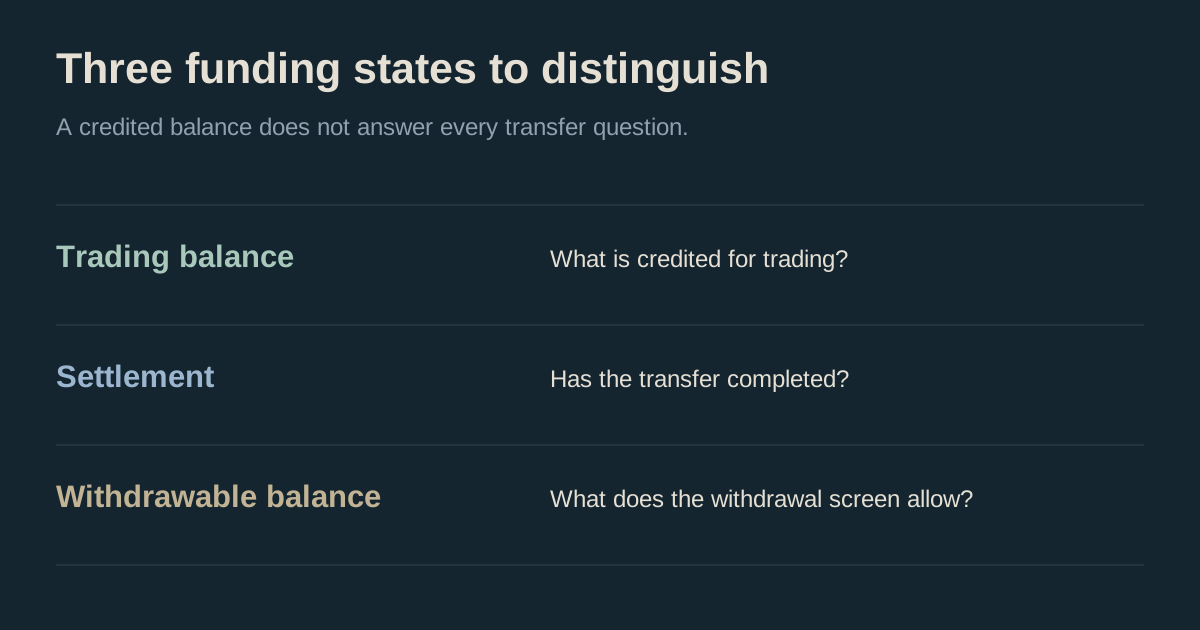
Credited, settled and withdrawable are different states
The Security Holds guide says withdrawal availability depends on deposit and withdrawal methods, with the withdrawal screen providing the account-specific time. Its table lists up to two days after settlement when moving debit/ACH deposits to a different method. Funds in open positions are not available for withdrawal until those positions are closed.
For a fictional $120 deposit, seeing $72 available to trade and $48 pending does not prove that $120 is settled or withdrawable. Check each figure's label and time. A promotional credit is another category: read the Kalshi promo guide for the applicable offer rather than assuming a deposit automatically earns a bonus or match.
Ready to review a payout rather than a deposit? Read how to withdraw from Kalshi for eligible methods, destinations and pending requests.
Kalshi deposit failed: a practical checklist
- Identify the method, amount, initiation time and time zone.
- Copy the exact error or status from the venue and provider.
- Check the method's minimum, account limit and matching-name requirements.
- Separate pending, declined, returned, partially credited and fully settled states.
- For wire/RTP, check the memo and receipt; for crypto, the asset, network and transaction hash.
- Check account-specific withdrawal availability separately from trading balance.
- Use the relevant official method page and Kalshi support route if the records do not explain the issue.
A useful report states what you tried, what happened, the relevant timestamp and reference, and what needs clarification. Keep passwords, authentication codes and unrelated payment details out of screenshots. For a broader incident, the status tool can provide context; one failed deposit does not establish an exchange-wide outage.