
On this page
A Polymarket order book shows available bids and asks for an outcome; a displayed probability is not necessarily your execution price. This guide, checked October 6, 2026, explains the international prediction CLOB. Verify the product you use before applying its mechanics to a separate US or perpetuals interface.
Read both sides of the book
The official concepts guide describes bids as buy interest and asks as sell interest. For analysis, identify the highest bid and lowest ask; their difference is the spread. Sort bids descending and asks ascending rather than assuming the first row of an arbitrary response is best.
Use the correct outcome identifier. A book for one outcome does not establish the executable price for another. Save the market, outcome, side and observation time alongside the numbers so a later comparison refers to the same instrument.
Displayed odds, best bid and best ask are different
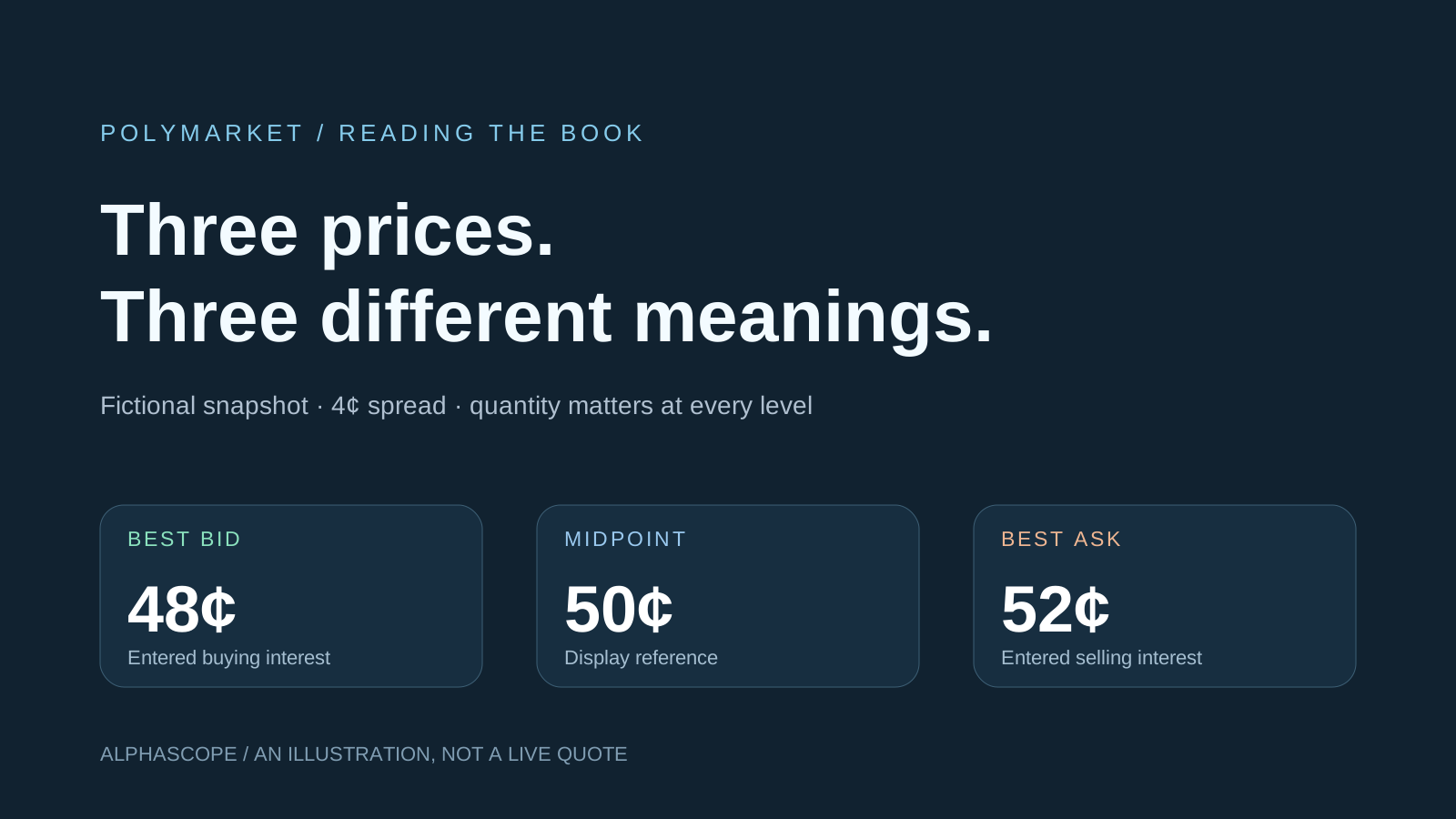
The concepts guide says the displayed price uses the midpoint of the bid-ask spread, with the last traded price substituted when the spread exceeds $0.10. A displayed price can therefore represent a different reference from the price available for an immediate buy or sell.
| Fictional snapshot | Value | Meaning |
|---|---|---|
| Best bid | 48¢ | Highest entered buying price |
| Best ask | 52¢ | Lowest entered selling price |
| Spread | 4¢ | 52¢ minus 48¢ |
| Midpoint | 50¢ | Average of these two prices |
In this invented snapshot, a 50¢ display does not demonstrate available selling interest at 50¢. Nor does a price-implied percentage establish the event’s true probability. A research view, a historical trade and a current executable order quote answer different questions.
For a second fictional snapshot, imagine a 38¢ bid, 62¢ ask and 51¢ last trade. The spread is 24¢, so the documented display fallback matters. Reading 51¢ as an available ask would substitute a historical observation for current selling interest.
Depth determines how much fits each price
A best price is one level, not an unlimited quantity. Consider this illustrative ask book, with no claim that it comes from a live market:
| Ask price | Available shares | Running share total |
|---|---|---|
| 52¢ | 30 | 30 |
| 54¢ | 70 | 100 |
| 57¢ | 200 | 300 |
A modeled 100-share purchase from these rows uses 30 at 52¢ and 70 at 54¢. Its cost is $15.60 + $37.80 = $53.40 before fees, averaging 53.40¢. Multiplying every share by the best ask would produce $52 and omit the second level. The difference is $1.40 in this static example, not a live execution prediction.
Try different quantities in the slippage calculator. It uses entered depth and does not guarantee that the same liquidity remains available when a real order reaches the venue.
Check the response’s context and constraints
The current market-data guide documents price and size levels, outcome identifiers, minimum order size, tick size, last-trade data and a timestamp that can be absent in the SDK response. It distinguishes CTF token IDs from V2 position IDs. Follow the current identifiers exposed for the selected outcome.
- Confirm the market and outcome identifier.
- Check whether both sides contain usable levels.
- Find the best prices from the actual levels.
- Inspect quantity at and beyond the best price.
- Record the timestamp and label missing time as unknown.
- Check current price increments, minimum size and market acceptance separately.
An empty side does not justify inventing a midpoint. A narrow spread with very little quantity also does not establish that a large order can fill near the display. Describe what the snapshot contains rather than turning one convenient number into a full liquidity assessment.
Order rules still matter
The placement guide requires market-specific increments and minimum size. It also explains that post-only rejects an immediately matching order instead of taking liquidity. A limit price alone therefore does not establish that an order will be passive.
The limit-order guide covers price boundaries, GTC/GTD lifetimes and immediate-execution policies. The fictional policy simulator compares filled, resting, canceled and rejected shares. Keeping these questions separate makes the book easier to read: depth describes the entered opportunity; policy describes what should happen to a request under its rules.
What a book cannot establish
A snapshot cannot promise a quick fill, identify all future liquidity, establish an account’s eligibility or guarantee a better price. Existing orders can change before execution. Read the API guide for integration context and confirm actual orders and trades through the venue’s appropriate account records.
Use research to understand the event and the contract’s settlement rules, then inspect the final executable quote and fees. A displayed price, a depth estimate, an accepted order and a settled position are separate pieces of evidence.