A senior Iranian official has promised a “painful and decisive response” to Israel’s airstrikes on the southern suburbs of Beirut, the most serious escalation in the war in Lebanon since a ceasefire was established in mid-April.
Ebrahim Rezaei, spokesperson for parliament’s foreign policy and national security committee, wrote on X on Sunday: “We will give a decisive and painful response to the Zionist regime’s attack on the suburbs … Watch the sky of the occupied territories tonight.” Iran considers Israel to be occupied Palestine.
Iran threatened last week that any Israeli attack on Beirut would be considered a violation of the US-Iran ceasefire and would be met with an attack on Israel. Israeli media said on Sunday that it anticipated a limited attack on Israel by Iran and Hezbollah in the wake of the strike.
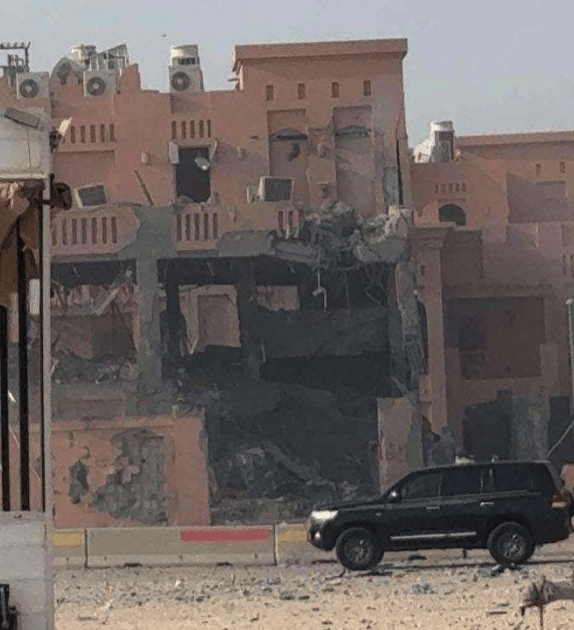
The attack hit two apartments in two separate buildings, Lebanon’s state news agency reported, killing two people and wounding 11, according to an initial death toll.
The Israeli prime minister’s office said that the Israeli military had struck “terrorist headquarters” in the southern suburbs “in response to Hezbollah’s firing at Israeli territory”. Israel said that it had intercepted Hezbollah rocket fire at northern Israel on Sunday morning, though the armed group did not claim responsibility for the attacks.
The attacks showered the streets in rubble and caused a wave of people to flee the southern suburbs in fear of further strikes.
The strikes on Beirut came just days after a ceasefire proposal agreed by the Lebanese government and Israel was rejected by Hezbollah. Washington had previously asked Israel to not strike Beirut, though Israeli media reported that the US had been informed before Sunday’s strike.
Fighting in Lebanon started on 2 March when Hezbollah launched rockets at Israel in retaliation for the killing of Iran’s late supreme leader Ali Khamenei, triggering an Israeli invasion. Israeli strikes have killed more than 3,613 people in Lebanon, while Hezbollah has killed at least 30 Israeli soldiers in Lebanon and 3 Israeli civilians.
The skirmishes in Lebanon have been an obstacle for Iran-US negotiations, as Tehran insists that Lebanon be included in a broader ceasefire deal. On Sunday, Trump told NBC News he was not demanding that Lebanon be part of any peace deal with Iran, claiming again that such an agreement, which has so far proved elusive, was near.
“I think they’d like to see it, but I’m not demanding,” Trump said in the interview recorded on Friday. He added: “We’re very close to a deal, or I’m going to blow the hell out of them [Iran].”
Before the strike on Sunday, Israel had issued a forced evacuation order for most of the city of Tyre, one of the largest cities in southern Lebanon which is hosting thousands of people displaced from villages in the surrounding area. Plumes of smoke were later seen rising from the city.
Israel also carried out airstrikes across the south of Lebanon, while Hezbollah claimed responsibility for rocket and artillery barrages against Israeli troops in the Nabatieh area. Fighting has been concentrated around the city of Zawtar al-Sharqiya after Israel took the Beaufort Castle along the route to Nabatieh, a large city in south Lebanon that is has been encircling.
On Saturday, the Israeli military killed two Lebanese army soldiers and an army captain in a strike on their vehicle. The Lebanese army is not party to the Hezbollah-Israel war.
The government of Lebanon and Israel are negotiating directly in Washington in an attempt to reach a comprehensive ceasefire. Hezbollah, which is the party fighting with Israel, is not participating in talks and in recent days has said it will not agree to any ceasefire deal that does not include a withdrawal of Israeli troops from Lebanon and an end to Israeli strikes across the country, not just in Beirut.
It is unclear how negotiations in Washington will be affected by Israel’s latest strikes on Beirut.
Israelis are now bracing for a possible attack by Iran, reviving fears of a conflict that had appeared to have subsided after the temporary ceasefire reached in April.
At the same time, Israeli forces continue to carry out strikes across Gaza, where the fragile truce brokered last October has done little to halt military operations in the besieged territory.
On Sunday, Israeli strikes on a Hamas-run police station and a vehicle in the Gaza Strip killed at least nine people and wounded 20 others, health officials said, as mediators began new efforts to salvage the truce.
One strike hit a police post adjacent to a large tent encampment of displaced families in Khan Younis in the south of the enclave, killing five people and wounding 16 others, medics said.
Earlier in the morning, Israel was also confronted with violence at home after a gunman, an Arab Israeli, opened fire at a gas station near the town of Kokhav Yair, located on the Israeli side of the boundary with the occupied West Bank, killing one person and wounding five others before being shot dead by police, authorities said.
The attack came amid heightened tensions across Israel and the occupied West Bank, days after a series of settler attacks on Palestinian communities and the fatal shooting of a Palestinian baby that further inflamed an already volatile situation.
Police identified the gunman as a resident of the predominantly Palestinian city of Taybeh in central Israel, though his motives were not immediately clear.
Authorities initially feared the shooting might be part of a coordinated attack. However, investigators later concluded that the incident involved the gunman and a single accomplice. The second suspect was arrested after allegedly attempting to stab police officers responding to the scene.