The United States is accelerating its military buildup in Israel amid escalating fighting and expanded strikes against Iran, with 10 additional U.S. Air Force refueling aircraft expected to arrive Friday and Saturday, ynet has learned.
Unlike previous waves of aircraft, the new tankers will not be stationed at Ben Gurion Airport. More than 60 American refueling planes have arrived in Israel so far, including 33 that were parked at the country’s main international airport.
As Ynet reported earlier this week, officials from U.S. Central Command protested after Transportation Minister Miri Regev moved to limit the number of American tankers stationed at Ben Gurion Airport. CENTCOM officials told senior Israeli defense officials that the restriction could undermine the operational flexibility of U.S. forces in the region.
The IDF supported the American position, describing the refueling aircraft as a strategic asset of critical operational importance. A compromise was ultimately reached under which the additional aircraft would be stationed elsewhere. Regev said this week that they would be based at Israeli Air Force facilities.
The arrival of the new tankers follows an Axios report that the Trump administration had informed Israel it intended to send dozens of additional refueling aircraft as it considered expanding military operations against Iran.
Three American and Israeli officials said the move followed a White House Situation Room meeting Tuesday, during which U.S. President Donald Trump was presented with several new military plans. Trump is weighing a large-scale attack on Iran that would go beyond the strikes conducted in recent days around the Strait of Hormuz.
Despite Trump’s claims that the strait remains open, the number of ships passing through it Thursday was the lowest in three weeks. Nearly all used the route closest to Iran that has been approved by Iran’s Revolutionary Guard Corps.
The options under consideration include strikes on Iranian infrastructure, including power plants, as well as further attacks on nuclear facilities intended to bury Iran’s enriched uranium stockpile deeper underground. Washington is also considering bombing the underground site at Pickaxe Mountain, which is suspected of being developed as a nuclear facility.
Trump has not yet made a final decision, according to Axios. However, officials said he appeared prepared to intensify the fighting enough to inflict major damage, pressure the Iranian regime to fully reopen the Strait of Hormuz and force Tehran to accept his nuclear demands.
American and Israeli officials said Trump could order a broader escalation within days.
U.S. forces struck Iranian targets around the Strait of Hormuz and along Iran’s southern coast overnight, marking the fifth consecutive day of American attacks. A U.S. official said the military bombed at least seven bridges near Bandar Abbas, a key center of Revolutionary Guard activity in the region.
The official said ammunition, supplies and reinforcements are transported through Bandar Abbas to other parts of the strait. A maritime control tower that had previously been attacked was also destroyed.
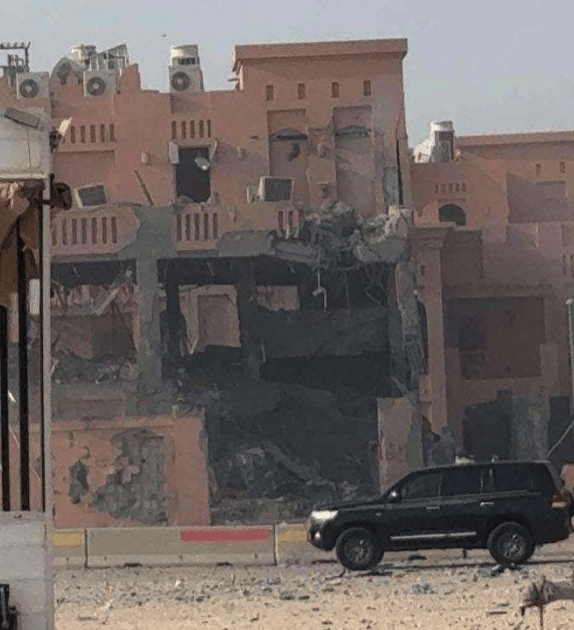
Iran, meanwhile, has intensified attacks on American bases in Jordan, Qatar, Bahrain, Iraq and Kuwait. The Revolutionary Guard also claimed to have attacked a U.S. base in Syria, although American forces withdrew from the site several months ago.
The United States currently has about 30 military refueling aircraft stationed at Ben Gurion Airport and a similar number at Ramon Air Base in the Negev. Israeli officials said Washington intends to send several dozen more in the coming days, returning the total deployment to the level seen at the beginning of the war.
According to the officials, the U.S. military prefers operating the tankers from Ben Gurion because other air bases in the region are more exposed to Iranian attacks and considered less secure for American aircraft. They said Iran has so far refrained from directly attacking Israel because such a move would likely trigger an especially powerful response.
The presence of dozens of military aircraft at Ben Gurion Airport for several months has created heavy congestion and at times brought civilian operations close to a standstill. Concerned that additional tankers could force widespread flight cancellations during the summer, Regev pressed for them to be moved or for their number to be capped.