Israel will escalate strikes against Hezbollah in Lebanon, Prime Minister Benjamin Netanyahu said on Monday evening, as a US official said the terror group had ignored warnings to halt firing at Israel in a conflict that could threaten US-Iran negotiations.
The prime minister’s remarks were followed by confirmation from the IDF that it had launched a fresh wave of strikes against Hezbollah targets in eastern and southern Lebanon.
Lebanese security sources said people had begun fleeing the southern suburbs of Beirut, a known Hezbollah stronghold, for fear of a renewed Israeli assault on the capital.
In Israel, local leaders in communities along the northern border announced that schools would be shut on Tuesday and until further notice, with most studies shifted to distance learning. The decisions were taken independently and without instruction to do so from the IDF Home Front Command.
A senior US official indicated on Monday, amid a surge in drone attacks targeting Israel, that Washington could soon greenlight a larger Israeli operation against Hezbollah in Lebanon.
Israel and Iran-backed Hezbollah have continued to trade blows despite an April 16 truce aimed at halting the deadliest spillover of the US-Israeli joint war on Iran. However, Israel has avoided targeting the terror group in Beirut and other locations beyond southern Lebanon, facing pressure from Washington amid the talks with Iran. Tehran has demanded a halt to Israeli attacks in Lebanon as a condition in talks with the US aimed at ending the broader war.
The IDF has struggled to counter the daily threat of Hezbollah drone attacks on troops in Lebanon and on communities in northern Israel.
Netanyahu said Israel would begin intensifying its operations in Lebanon again, after incidents on Monday in which an unmanned aerial vehicle crashed into a home in the northern border community of Metula, and an explosive drone damaged a school bus stop in the border village of Shomera. A soldier was also killed by a suicide drone on Sunday, the latest in a line of servicemen recently killed in such attacks.
“Hezbollah has ignored repeated requests to stop firing at Israel, including a recent ultimatum,” the senior US official told The Times of Israel. “Israel will never be expected to passively absorb attacks on its forces and civilians. This is not the Biden administration.”
The official noted that over the past eight days, Hezbollah had fired over 1,000 drones and more than 700 rockets at Israel, in an apparent bid to derail talks between Jerusalem and Beirut, several rounds of which have been held in Washington.
“It broke the ceasefire on March 2 and is now intent on denying the Lebanese people a path to peace and reconstruction,” the official said, referring to Hezbollah’s decision to join Iran in attacking Israel days into the joint US-Israeli war on the Islamic Republic.
The Iran-backed terror group sees the talks between Israel and Lebanon in Washington as “an existential threat,” the official said, and fears a ceasefire that would strip it of its “power and narrative.”
IDF struggles to contain Hezbollah drone threat
Hezbollah, in recent weeks, has been steadily increasing the number of drone, UAV and rocket attacks on Israeli troops deployed in southern Lebanon and on northern Israel communities, apparently undeterred by the ostensible US-brokered ceasefire between Israel and Lebanon.
In a rare public acknowledgement, an IDF official told Channel 12 on Monday that Israel has found itself “defenseless” against the drone threat posed by Hezbollah, with the terror group increasingly deploying first-person view drones guided by fiber-optic cables, which are largely immune to electronic jamming.
“At the moment, we are defenseless in the face of this deadly reality,” said the unnamed official, whom Channel 12 described as someone involved in security cabinet discussions.
The official said that Israel was using makeshift methods to defend against the surge in drone use. Jerusalem is “without solutions on the diplomatic stage,” the official said, referring to Israel being limited in its ability to carry out widespread offensive operations in Lebanon due to pressure from the US.
“The truth is our hands are tied, and that needs to change soon,” the official said, adding that civilian areas were sitting ducks to the cheap Hezbollah attack drones.
Appearing to suggest that the IDF had run out of patience with Hezbollah, the chief of the IDF Northern Command Maj. Gen. Rafi Milo said on Monday evening that the military was “at war” in Lebanon, and would “not tolerate fire on the home front.”
“Harm to civilians and the civilian sphere is not a reality we can accept or treat as routine,” Milo said at a ceremony for the 474th “Golan” Regional Brigade in Katzrin, a city in the Golan Heights, accusing Hezbollah of deliberately escalating the security situation in the north through direct attacks on civilians.
Channel 12 also reported that the IDF has thinned out troops in southern Lebanon to avoid exposing them to the drones, after a string of deadly attacks in recent days.
The report said the IDF was pushing the government to authorize a wider operation.
‘Intensify the blows’
To that end, Netanyahu announced in a video statement on Monday night that he had instructed the IDF to “press the pedal even harder” against Hezbollah.
“We are at war with Hezbollah. Just in recent weeks, our brave fighters have eliminated more than 600 terrorists,” said the premier. “But we are not taking our foot off the gas. On the contrary, I have instructed them to press the pedal even harder.”
“We will strike them,” he reiterated. “Yes, they are attacking us with drones, cyber-enabled drones, and we have a special team working on this — and we will solve that too. But what this requires of us now is to intensify the blows, increase the force,” Netanyahu said, vowing to “strike them decisively.”
His comments came hours after far-right ministers Itamar Ben Gvir and Bezalel Smotrich both separately called for a return to full-fledged fighting in Lebanon, with the former demanding that Israel expand deeper into the country and the latter declaring that “for every explosive drone, 10 buildings in Beirut must fall.”
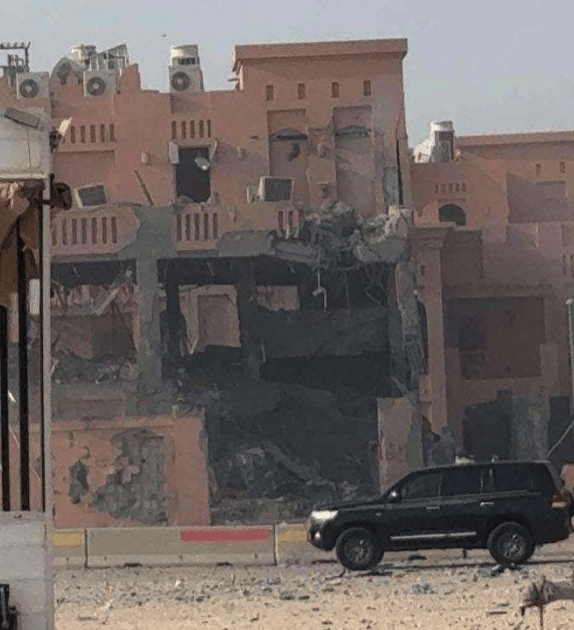
Shortly after the prime minister’s statement, the IDF announced that it had launched a wave of airstrikes targeting Hezbollah infrastructure in the Beqaa Valley, in eastern Lebanon, and other areas of the country.
The strikes followed an earlier wave targeting infrastructure in the southern city of Tyre.
Those strikes came after Israel issued evacuation orders for 10 villages earlier in the day.
Amid the fresh strikes, Lebanon’s National News Agency said on Monday night that a man and a woman had been killed in a strike on their home in Arabsalim, southern Lebanon. Earlier in the day, it reported that three people had been killed in southern Lebanon in strikes targeting two cars and a motorcycle.
In a statement following the new strikes, the IDF said it had struck more than 70 Hezbollah sites across Lebanon in the past 24 hours, including around 10 command centers and weapons depots in Tyre.
The military said it used more than 85 munitions to target the sites, which were “used by Hezbollah to advance attacks against IDF troops and Israeli civilians.”
The IDF also said the air force struck and killed Hezbollah operatives riding motorcycles in an area where troops were operating in southern Lebanon. It was unclear whether the incident was the same one reported by the NNA.
Northern mayor warns ‘war will intensify’ in coming days
Earlier on Monday, following the UAV strike in Metula and a host of other drone incursions, northern council heads and mayors met with the IDF’s Milo to demand answers on the risk posed to their communities by Hezbollah and the future of the IDF’s operations in Lebanon, according to Ynet.
Following the meeting, Shlomi Mayor Gabi Naaman warned residents that “the war will intensify even more tonight and in the coming days.”
“We must be more vigilant than usual,” he added.
Naaman said he requested that the Home Front Command and Education Ministry shut down the education system and move to distance learning amid the re-escalating conflict.
The IDF’s move to ramp up its offensive in Lebanon comes even amid concern in Israel that an emerging deal to end the US-Iran war will also force it to halt operations against Hezbollah.
Jerusalem, which launched the war in Iran together with the US, has been almost entirely locked out of the negotiations between Washington and Tehran, according to media reports.
Separate from the US-Iran negotiations, Lebanon and Israel began landmark US-brokered talks last month and are preparing for a fourth round in early June, preceded by a meeting between military delegations at the Pentagon on May 29.
The talks have been vehemently rejected by Hezbollah, with the terror group’s leader, Naim Qassem, reiterating his opposition to them on Sunday evening and repeating his refusal to allow Hezbollah to disarm.
US Secretary of State Marco Rubio condemned his remarks, accusing him of calling for the “overthrow” of the Lebanese government and of wanting to “plunge Lebanon back into chaos.”
In response to Rubio, Hezbollah MP Ali Ammar called on the US administration on Monday to stop “interfering in Lebanese affairs and destabilizing the country.”