
On this page
Slippage is the difference between the price you expected and the price your order actually receives. On Kalshi or Polymarket, the best displayed quote might cover only a small number of contracts. A larger order can reach worse prices deeper in the book. Prices can also change between checking a quote and submitting an order.
Use our free prediction-market slippage calculator to estimate the average fill for a specific order size. You can edit every price level, switch between buying and selling, and see what a price limit would leave unfilled. Its starting numbers are an illustration, not a live market.
What is slippage in Kalshi?
For a buyer, adverse slippage means paying more per contract than the reference price. For a seller, it means receiving less. A market shown around 52¢ does not establish that 200 contracts are available at 52¢. Look at the prices and quantities available for the exact outcome side.
Kalshi's limit-order guide explains that you can set a maximum purchase price. Orders can fill at that price or better, but a fill is not guaranteed. A limit below available asks can remain unfilled; sufficient quantity at acceptable prices matters as much as the headline quote.
A worked slippage example
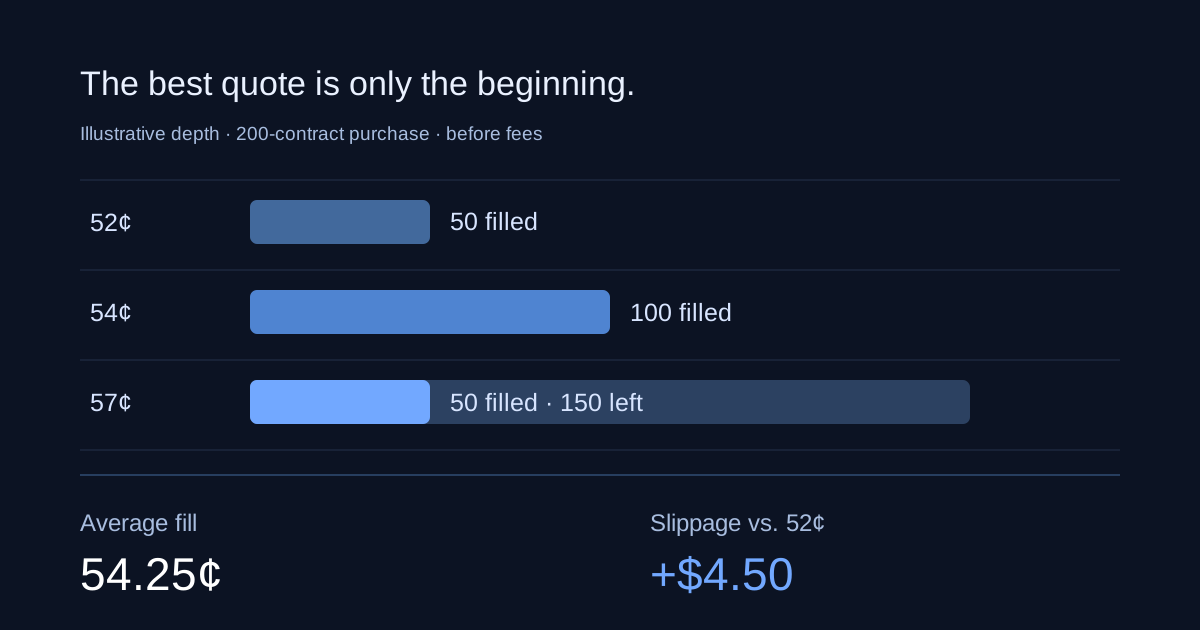
Suppose these illustrative asks are available for a Yes contract:
| Ask price | Available contracts | Used in a 200-contract purchase | Cost |
|---|---|---|---|
| 52¢ | 50 | 50 | $26.00 |
| 54¢ | 100 | 100 | $54.00 |
| 57¢ | 200 | 50 | $28.50 |
The purchase costs $108.50 before fees. Divide by 200 to get an average price of 54.25¢. Compared with the initial 52¢ ask, adverse slippage is 2.25¢ per contract, or $4.50 across the filled order. Relative slippage is 2.25 ÷ 52 ≈ 4.33%. It is not a 4.33 percentage-point change in the event's probability.
A 54¢ buy limit would access only the first 150 contracts in this snapshot. They cost $80 and average 53.33¢. The remaining 50 contracts cannot fill from the entered depth at that limit. What happens next depends on the venue and order instructions: some orders may rest or partially fill, while fill-or-kill instructions can reject a purchase that cannot fill completely.
Slippage vs. spread vs. fees
| Cost concept | What it measures | Question to ask |
|---|---|---|
| Spread | The gap between best bid and best ask | What would buying and selling immediately cost? |
| Slippage | Your execution compared with a chosen reference | What prices can fill my entire size? |
| Fees | The venue's charges for the trade | What does the final order preview charge? |
Polymarket US's spread documentation distinguishes buyers' bids from sellers' asks. Buying crosses to available asks; selling reaches available bids. A midpoint or last trade can differ from either executable price.
Choose the reference explicitly. This calculator uses the best entered ask for buys and best entered bid for sells. Comparing with a chart's midpoint instead combines part of the spread with depth-based slippage. Keep those measurements separate when reviewing a trade.
Why Polymarket sales can slip near resolution
Polymarket US's price-slippage guide describes thin buying demand as an outcome appears nearly decided. A winning-looking position can therefore sell below the displayed price before final settlement. High confidence in the event and easy execution are different things.
Compare the executable bid for your size with the value of waiting and the remaining settlement uncertainty. Do not assume that selling early will return the displayed position value. Polymarket US and the international platform have separate rules; check the venue where your account and contract actually live.
How to reduce surprises in your fill
- Read depth for your size. Sum available quantities at acceptable prices, instead of using total historical volume as a substitute.
- Set a price boundary. Decide the highest buy price or lowest sale price you can accept before submitting.
- Recheck after news. A book captured before a major update may have little connection to current execution.
- Separate fees from price impact. A fee-free transaction can still have an unfavorable fill.
- Review actual fills. Use the executed quantities and prices to calculate the weighted average, including partial executions.
Dividing an order into smaller parts does not guarantee a cheaper result: the book may replenish, disappear, or move while you wait. Likewise, setting a limit controls the acceptable price but does not create liquidity.
Evaluate the trade after execution costs
In the example, a forecast edge calculated using 52¢ overstates the edge available for 200 contracts. Use 54.25¢ plus applicable fees when assessing that size. The expected value calculator helps compare all-in cost with an independent probability; the profit calculator shows payout and potential loss.
For a broader introduction, read the Polymarket order-book guide. Alphascope helps you research odds, forecasts, and news, while the exchange's final order preview remains the place to verify execution terms.
Sources checked: October 6, 2026. All price ladders in this article are worked examples.