Education·7 min
Market Microstructure: Meaning & Trading Examples
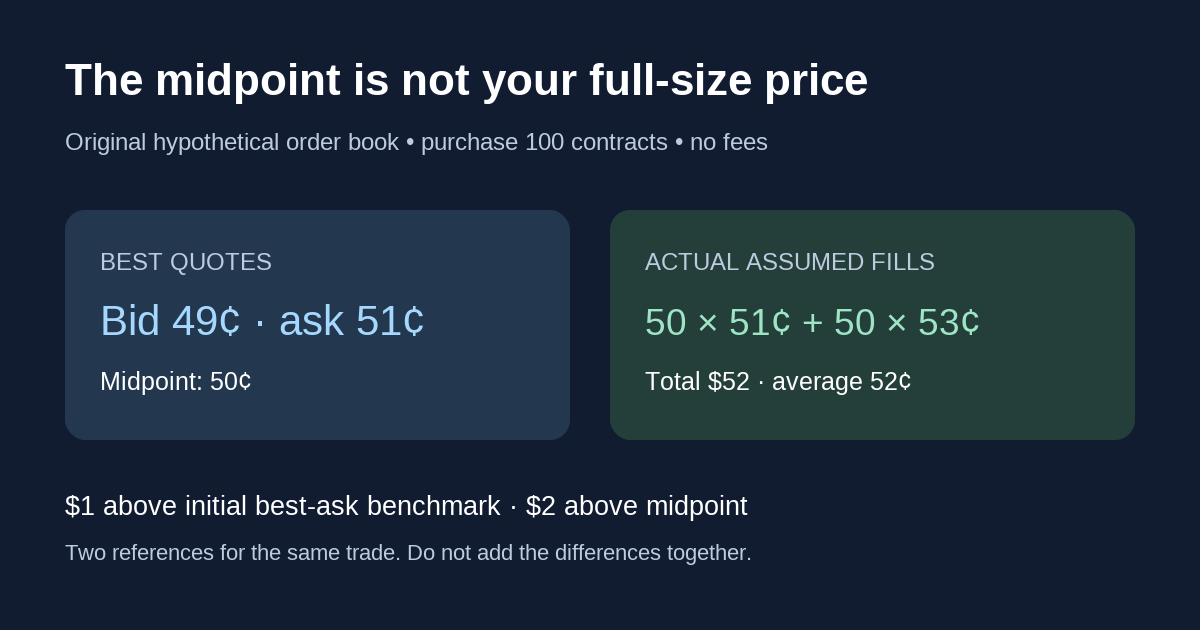
Understand market microstructure through original order-book, firm-quote and auction examples. Compare price formation, depth, spreads and prediction-market execution.
Nov 9, 2026

Blog
Strategies and guides for trading prediction markets — from beginner tutorials to advanced trading workflows.
Understand market microstructure through original order-book, firm-quote and auction examples. Compare price formation, depth, spreads and prediction-market execution.
Nov 9, 2026
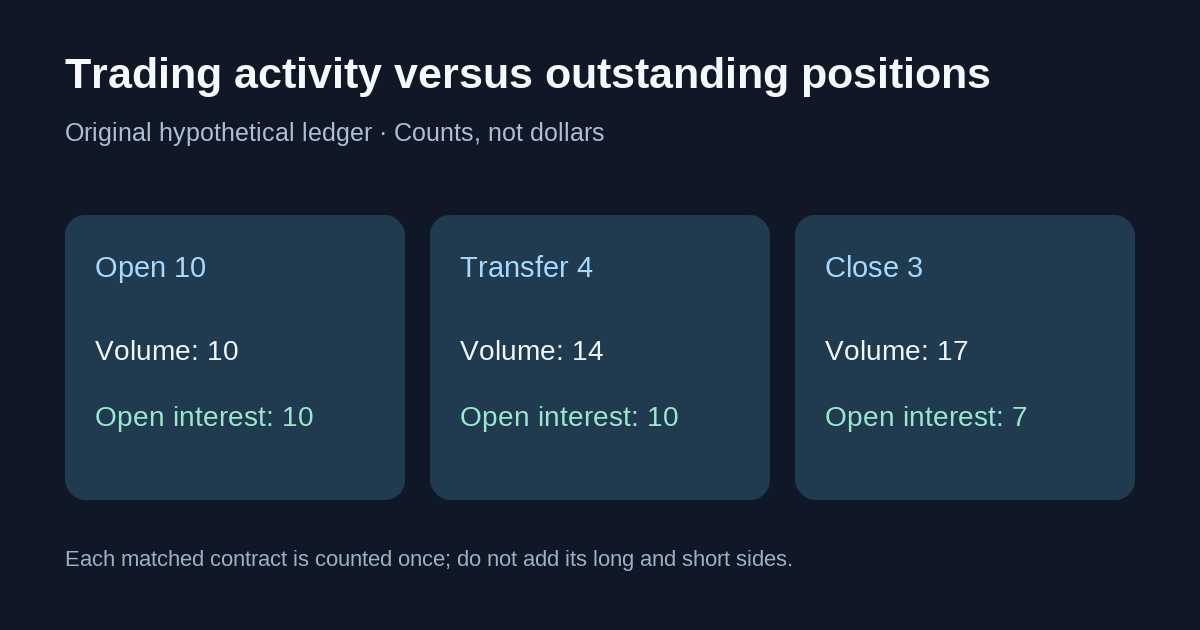
Compare open interest and volume with an original opening, transfer and closing trade ledger. Learn counting rules, options context and Kalshi API quantity pitfalls.
Nov 9, 2026

Start with Kalshi public market data, then understand signed API keys, token-based rate limits, 429 errors and checks before building a trading bot.
Feb 1, 2026
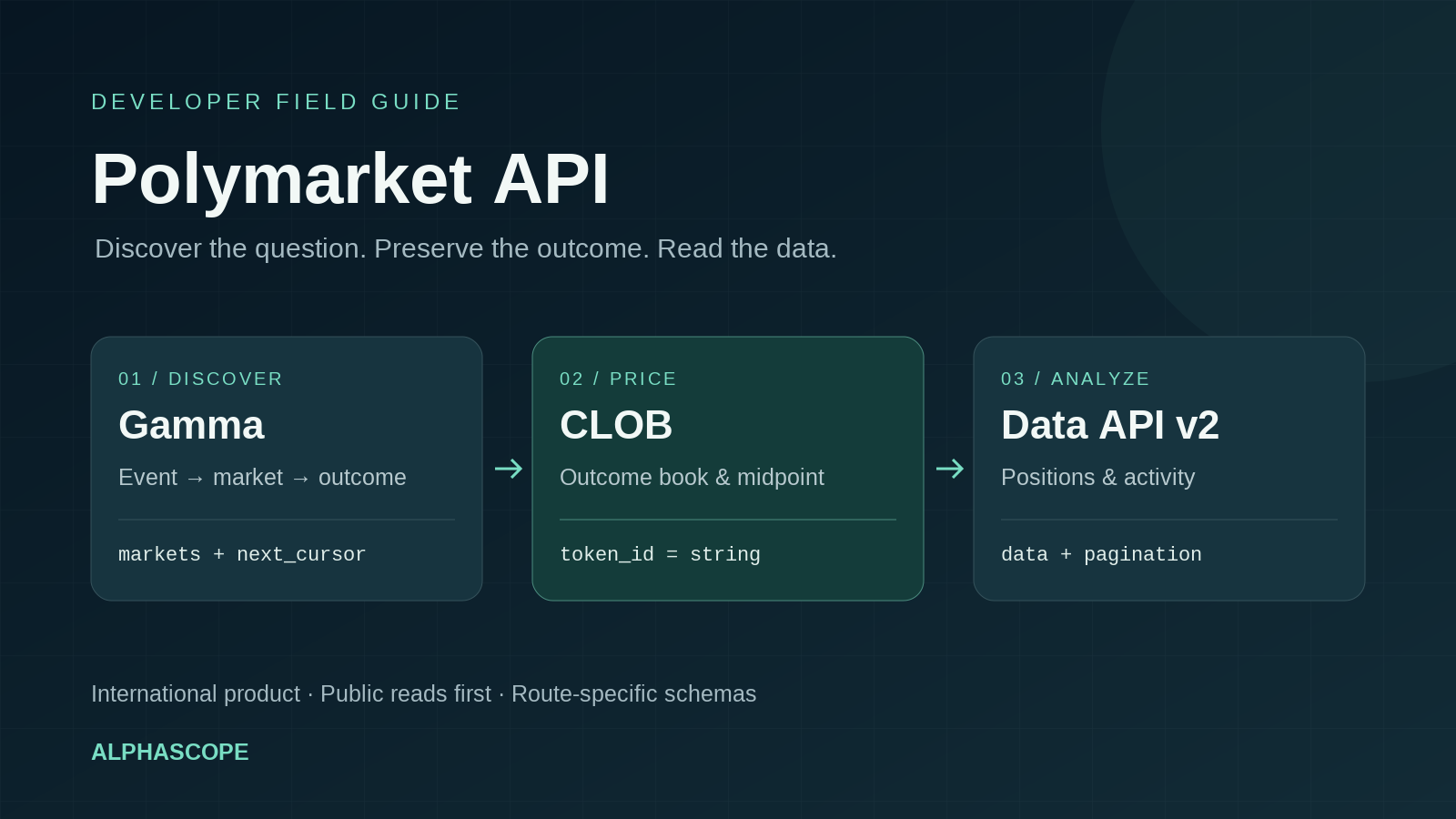
Use Polymarket's Gamma, CLOB and Data APIs correctly. Start with verified public reads, map outcome IDs, distinguish API keys and update retired Data API v1 workflows.
Jan 25, 2026
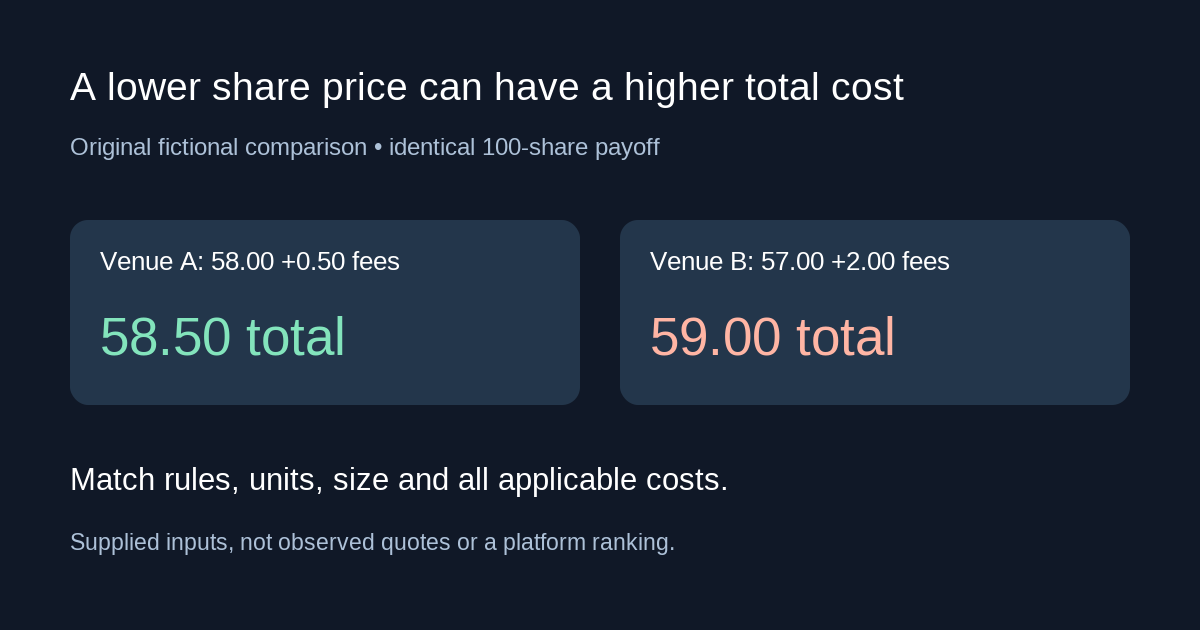
Compare Polymarket alternatives by purpose, access and cost: Kalshi, PredictIt, OPINION, Manifold and Metaculus. Includes a current source review and original worksheet.
Jan 25, 2026
Learn how to use prediction markets to hedge against elections, rate changes, tariffs, and recessions. Practical strategies for Kalshi and Polymarket.
Mar 1, 2026
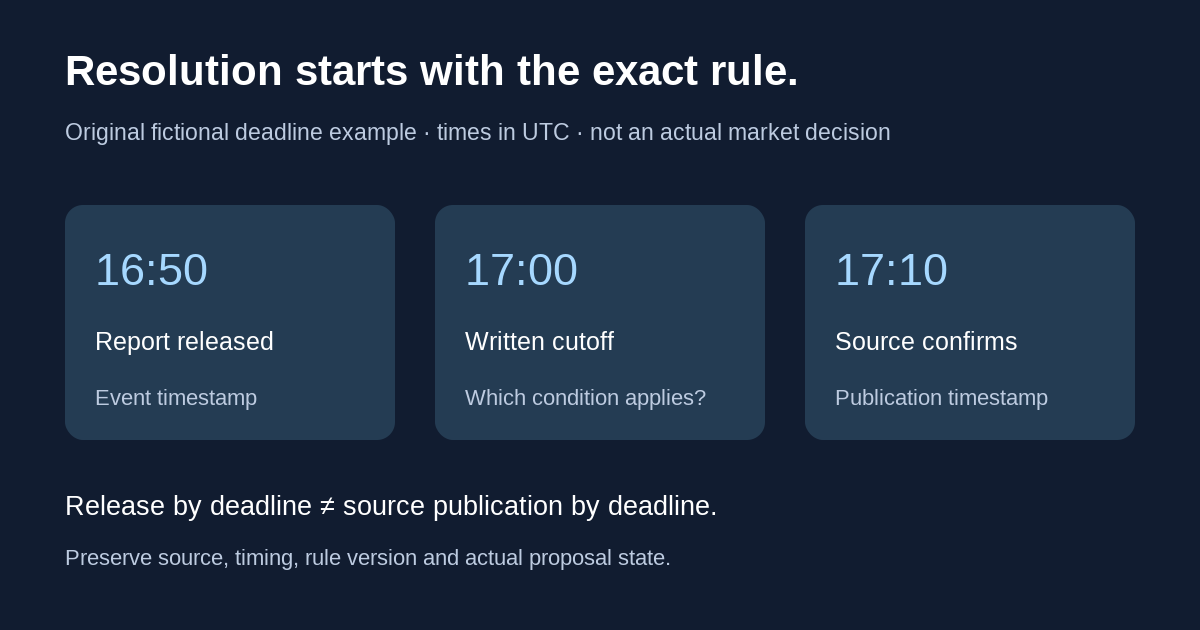
Understand Polymarket resolution disputes, UMA proposal rounds and Kalshi rule reviews. Original deadline, rule-wording and payout examples explain what evidence to preserve.
Mar 1, 2026
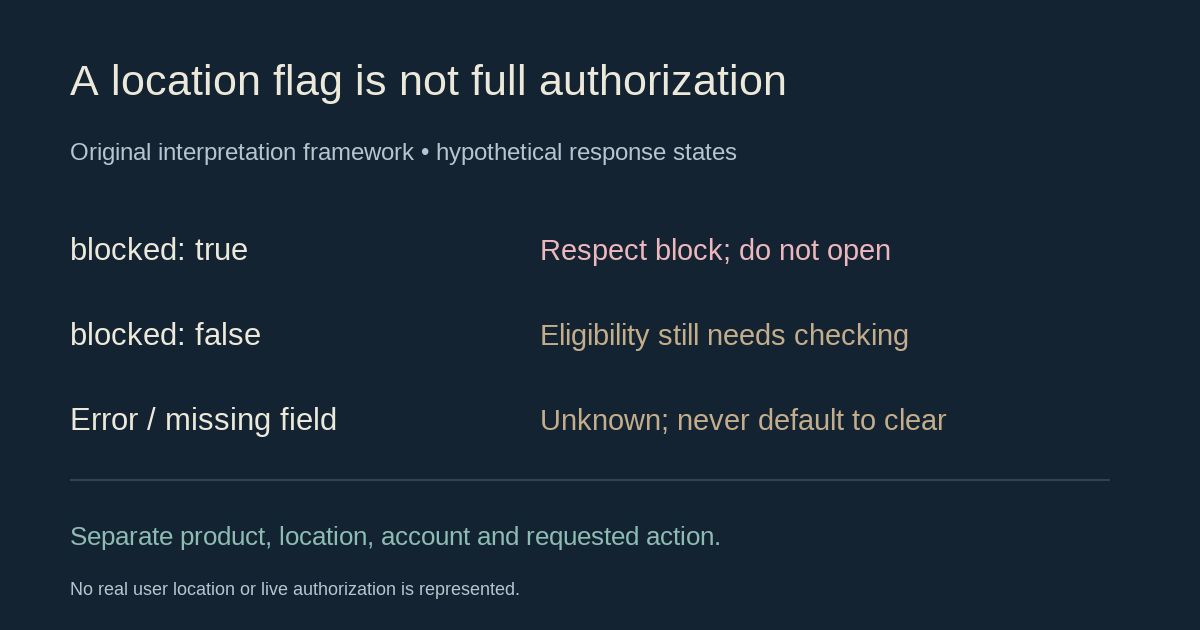
Check Polymarket country and region restrictions, conflicting official labels, US vs International access and the geoblock API. Includes an offline response-check example.
Jun 5, 2026
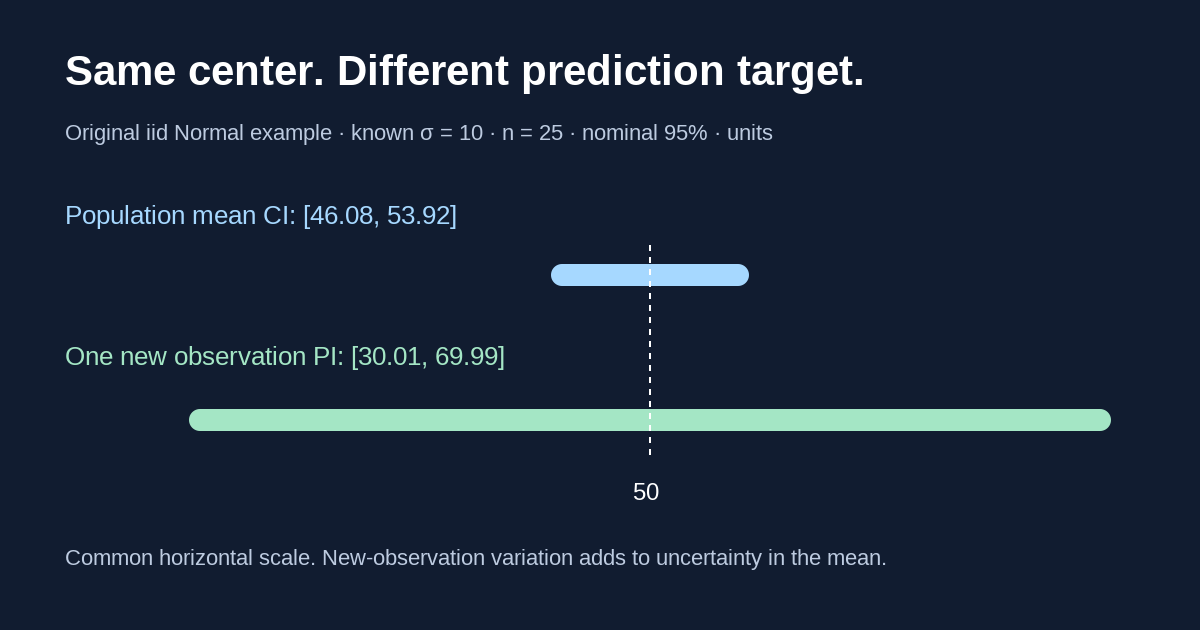
Compare prediction and confidence intervals with an original known-variance Normal example. See why mean uncertainty differs from a new observation and reproduce the calculations.
Nov 9, 2026
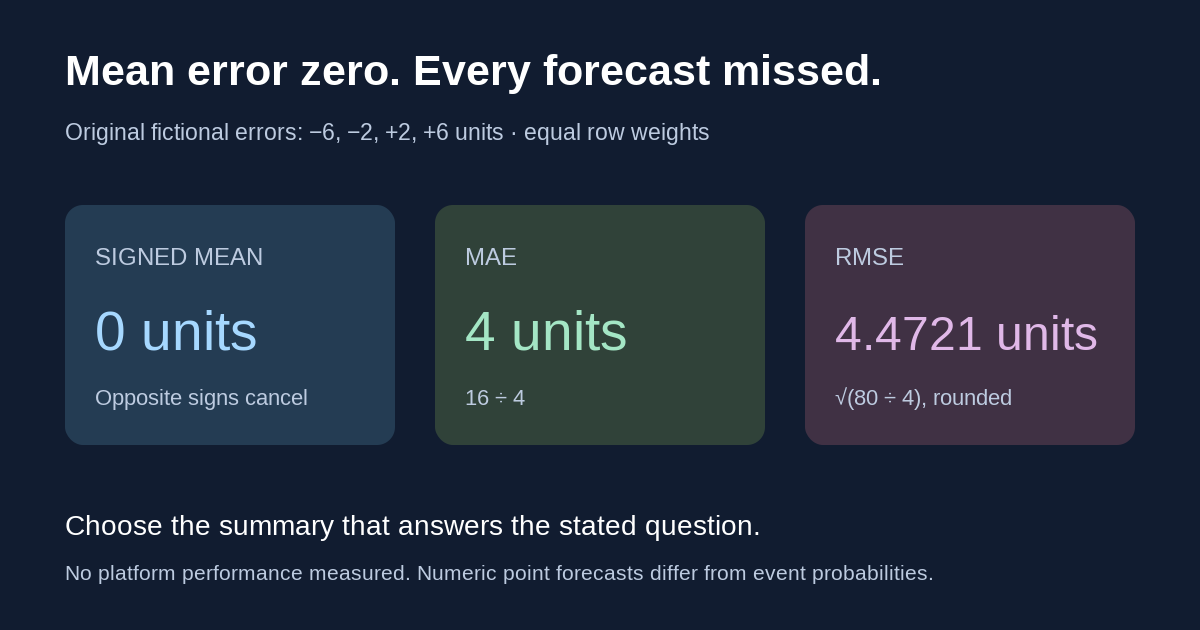
Calculate forecast error as actual minus forecast. An original ledger compares mean error, MAE and RMSE, explains zero denominators and separates numeric from probability forecasts.
Nov 9, 2026
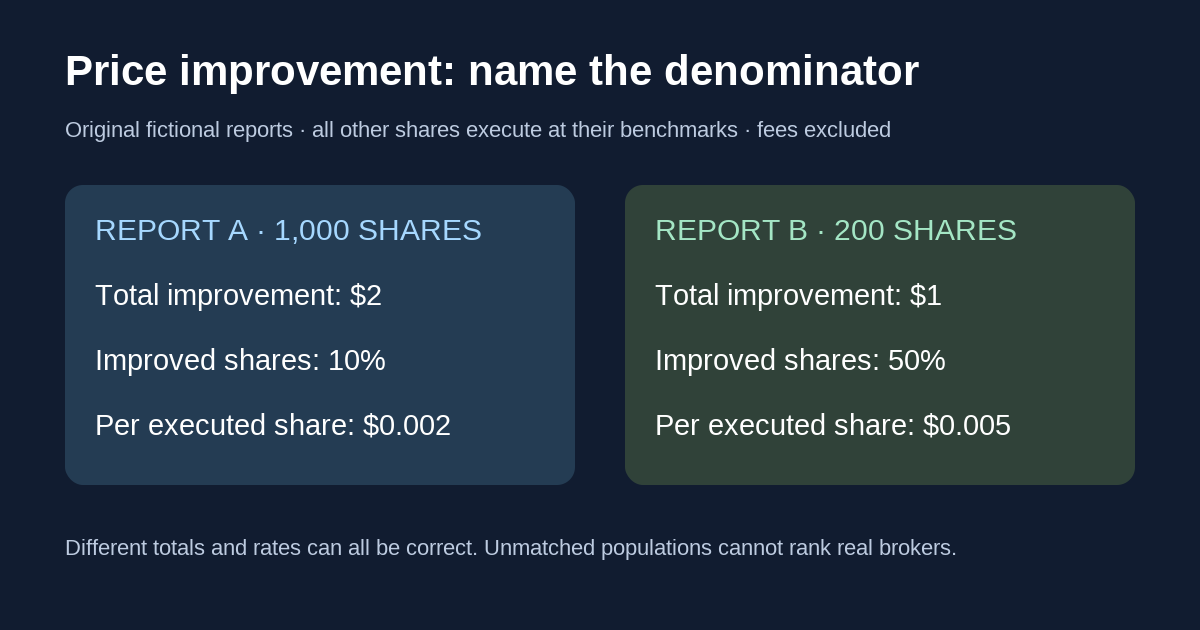
Compare price improvement across brokers using matched benchmarks and denominators. Original buy/sell examples explain total dollars, improved-share rates, net results and fees.
Nov 9, 2026
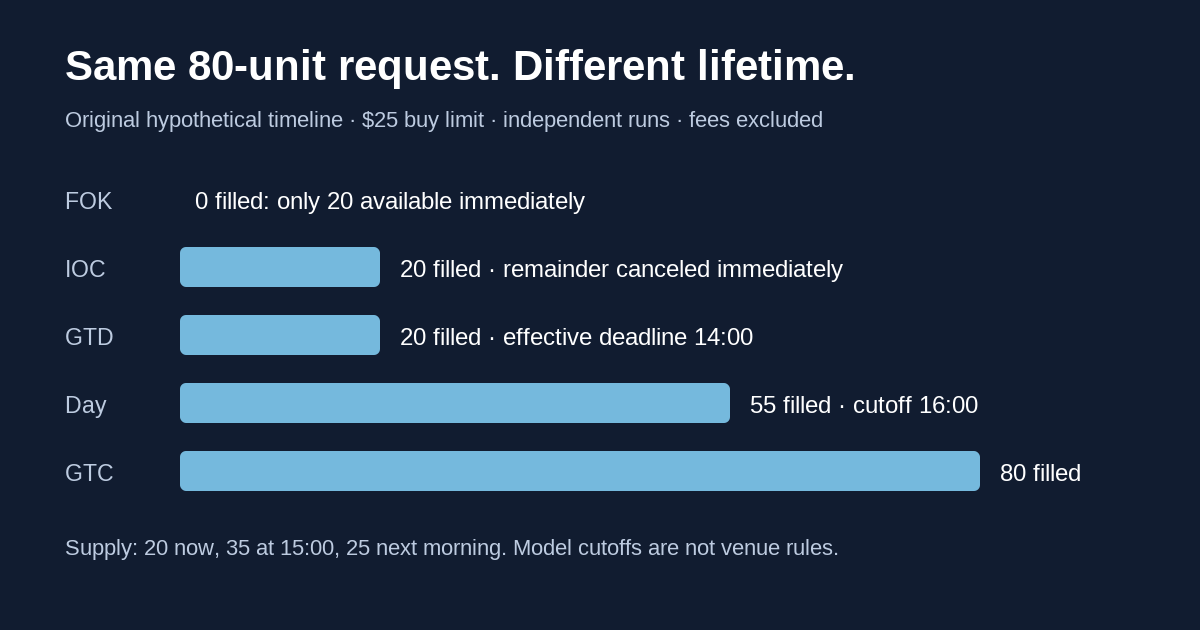
Learn what time in force means in trading. Compare Day, GTC, GTD, IOC and FOK with an original timeline, and distinguish lifetime from price, session and order status.
Nov 9, 2026
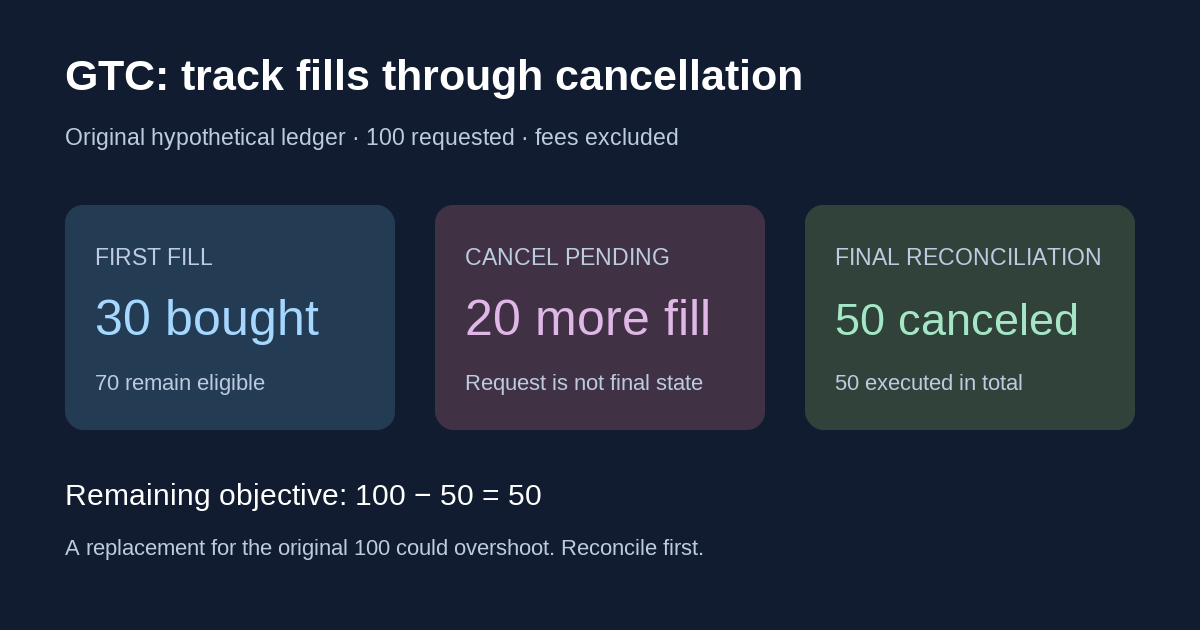
What a good till canceled order means, day vs GTC, broker expiration and session rules, plus an original partial-fill and cancellation ledger to reconcile replacements.
Nov 9, 2026
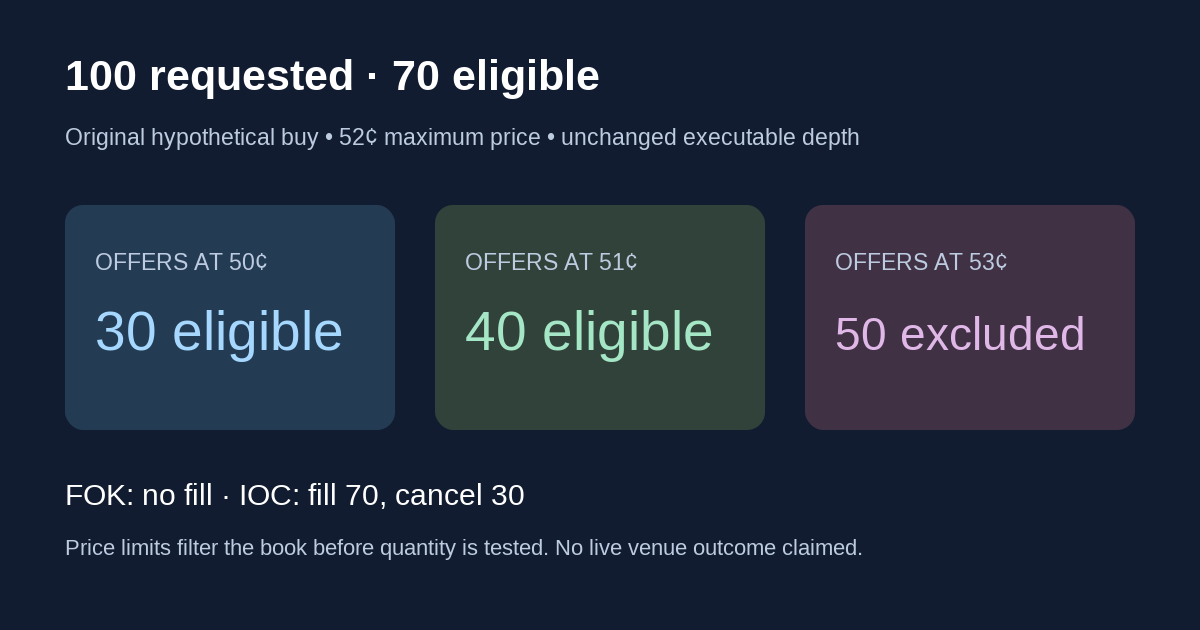
Learn what a fill-or-kill order means with original depth examples. Compare FOK, IOC, FAK and all-or-none, price conditions, partial fills and prediction-market units.
Nov 9, 2026
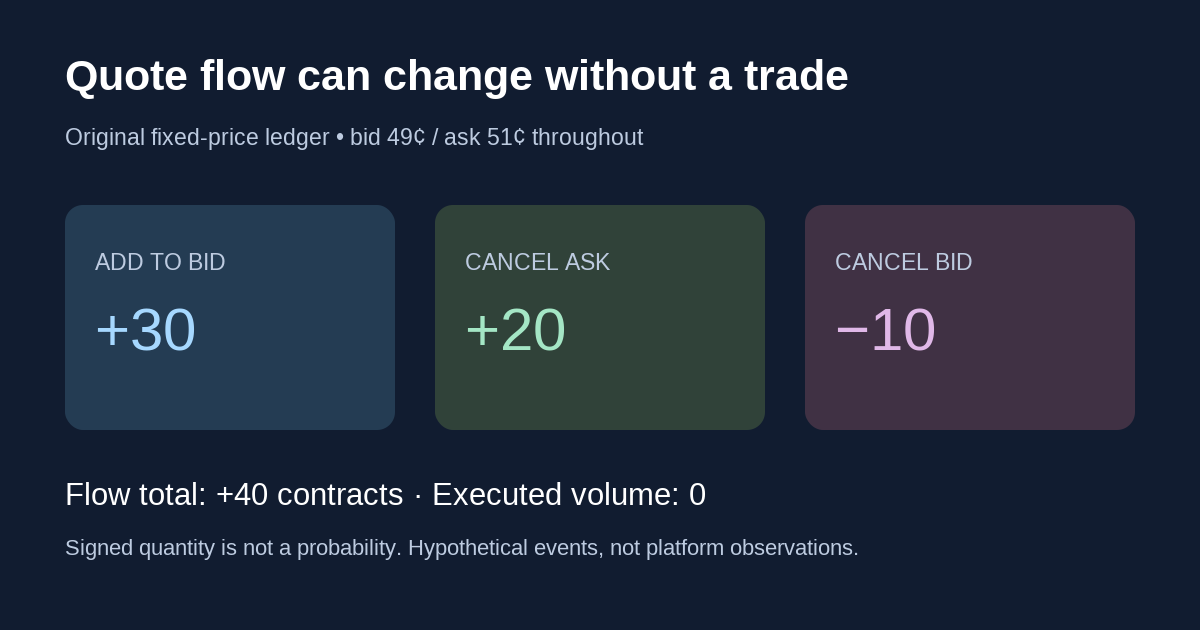
Understand order-flow imbalance with an original event ledger. Compare flow, snapshot and trade measures, handle price changes and interpret prediction-market books.
Nov 9, 2026
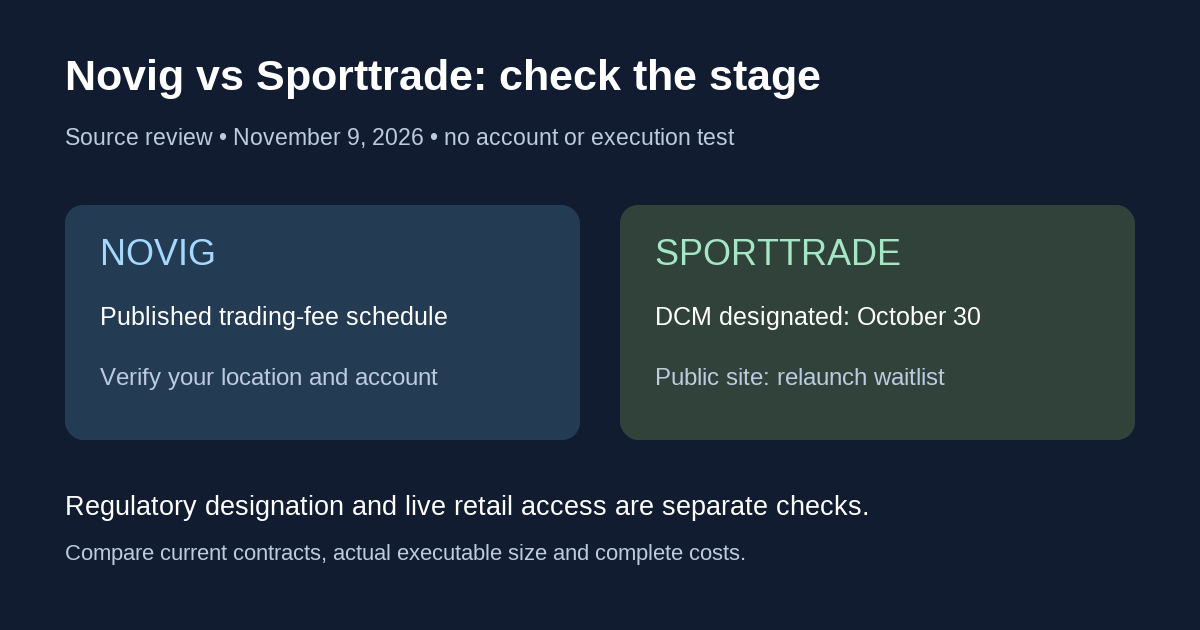
Compare Novig and Sporttrade using current CFTC records, Sporttrade’s relaunch waitlist and Novig’s fee schedule, with an original live-trade cost example.
Nov 9, 2026
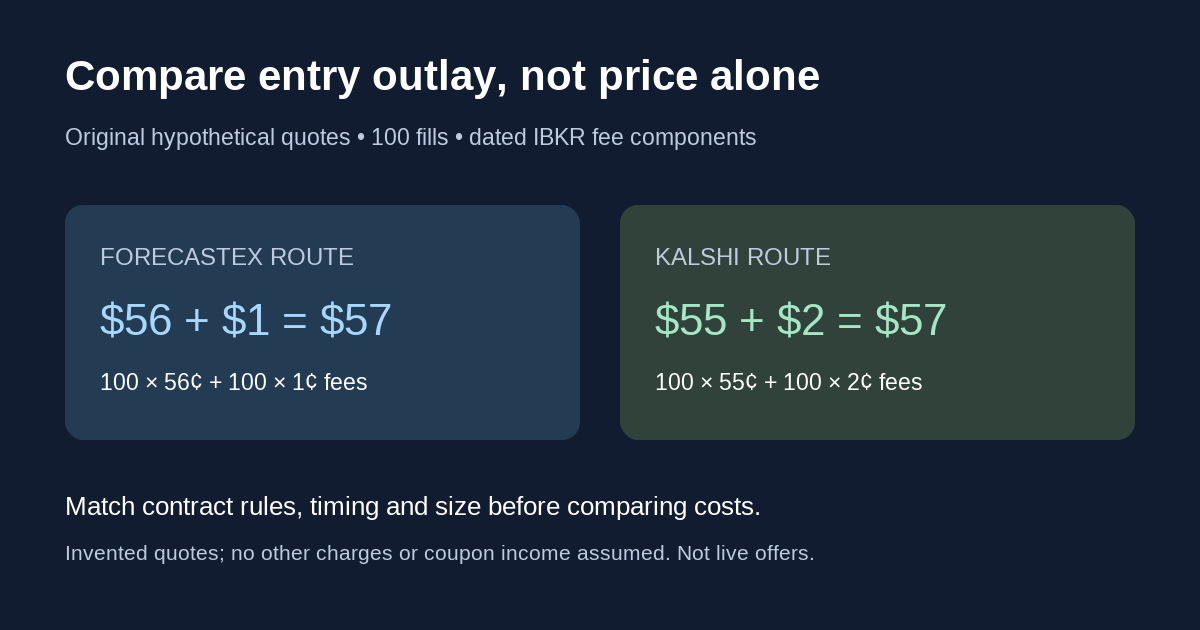
Review IBKR prediction markets, ForecastTrader, Kalshi, CME and ForecastEx access. Compare published fee components, eligibility and an original entry-cost example.
Nov 9, 2026
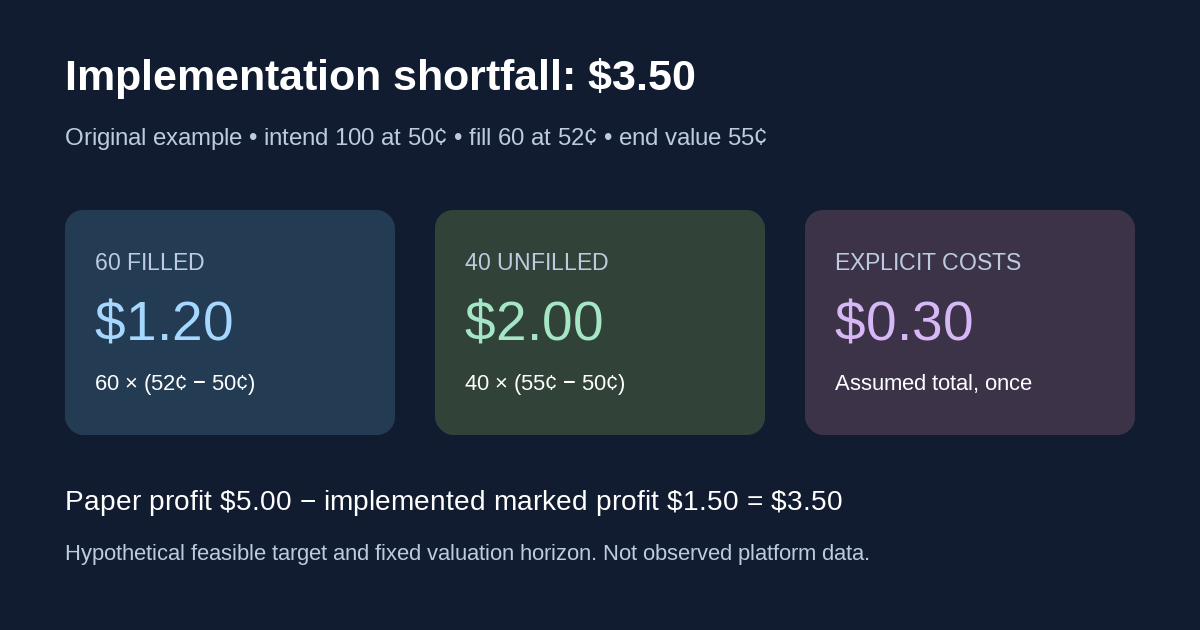
Calculate implementation shortfall with original buy, sell and partial-fill examples. Reconcile paper and actual results, unfilled quantity, fees and basis points.
Nov 9, 2026
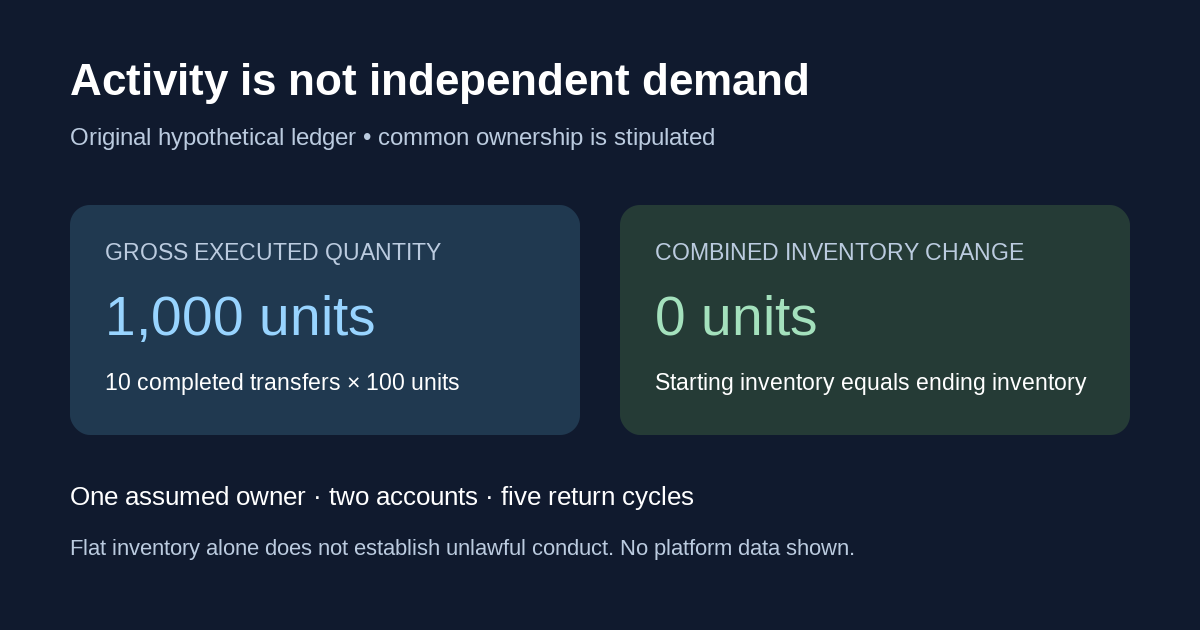
Compare Coinbase, Suyun Gu and HYDRO wash-trading cases using official records. Understand settlements, judgments, penalties and why volume is not independent demand.
Nov 9, 2026
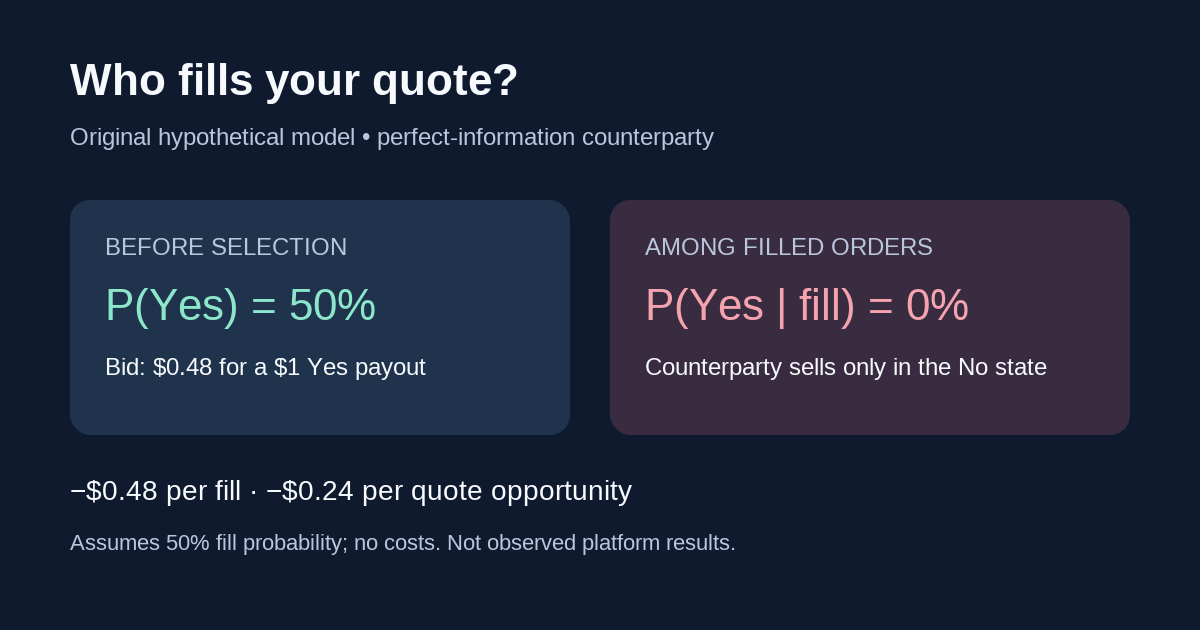
Learn adverse selection with original examples in economics, insurance and prediction markets. Compare moral hazard and see why getting filled changes expected value.
Nov 9, 2026
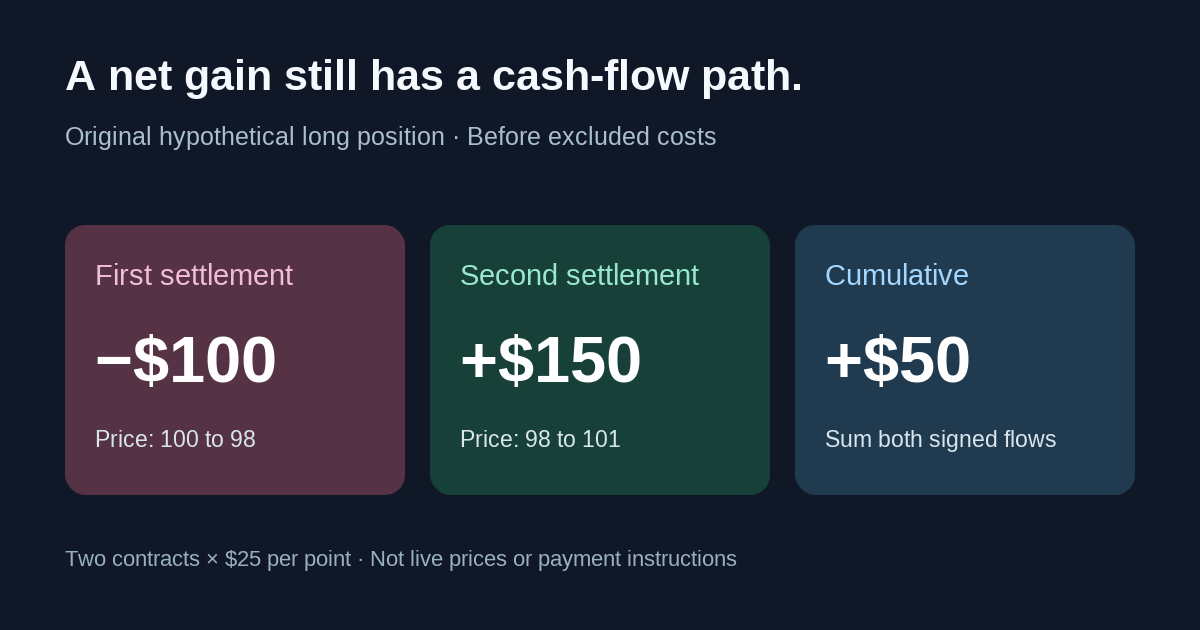
Understand variation margin with a worked futures cash-flow ledger. Compare initial and maintenance margin, new-trade calculations, collateral and settlement timing.
Nov 9, 2026
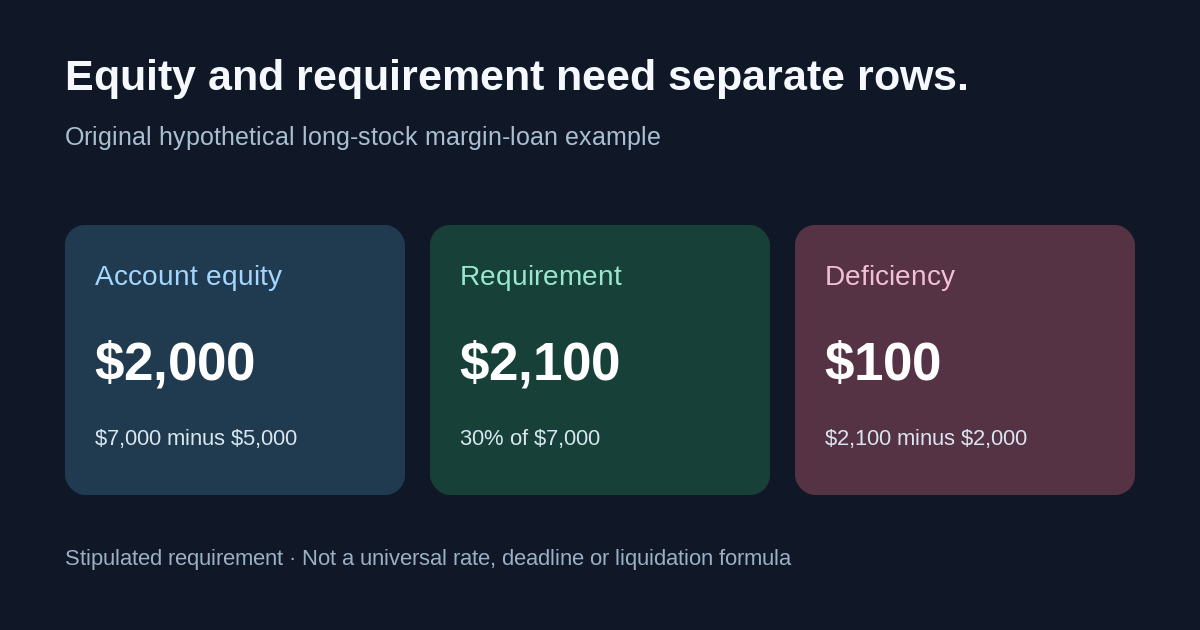
Understand maintenance margin with worked securities and derivatives examples. Compare initial requirements, equity shortfalls, changing thresholds and liquidation rules.
Nov 9, 2026
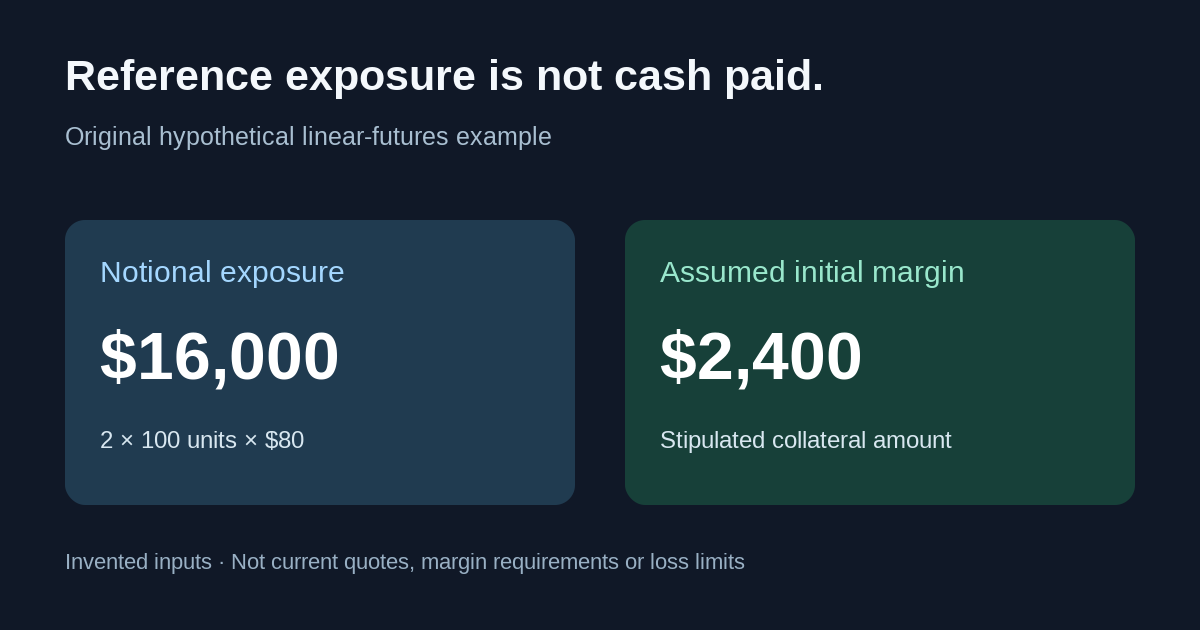
Learn what notional value means with worked futures, stock-perp and binary-contract examples. Separate reference exposure from margin, purchase cost and payoff.
Nov 9, 2026
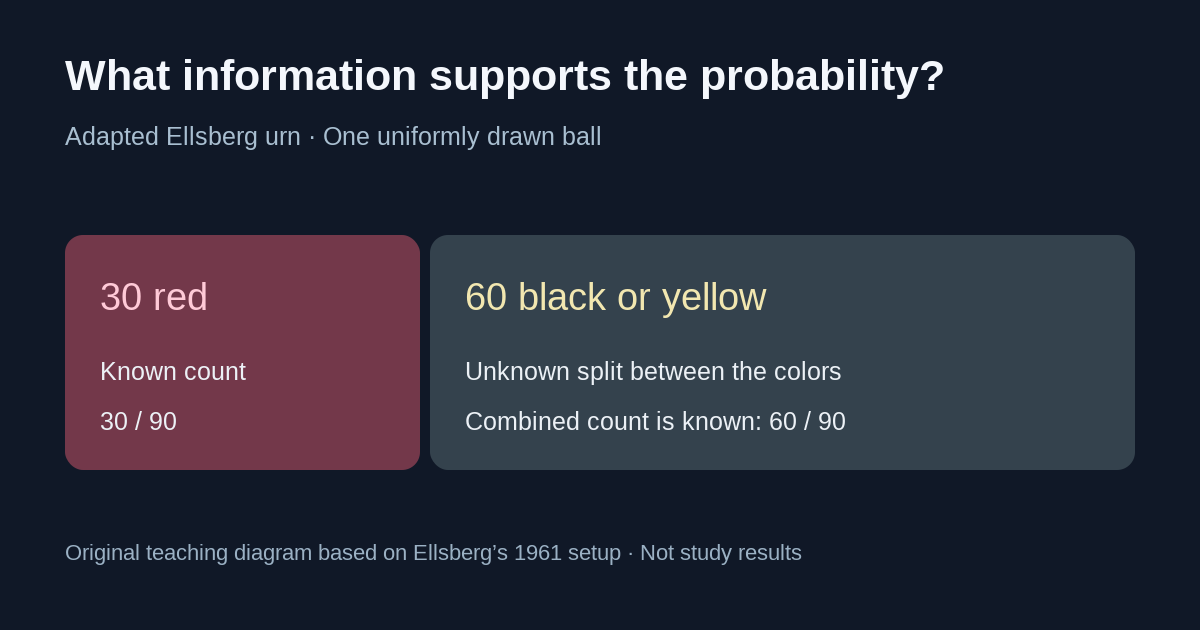
Learn ambiguity aversion through an adapted Ellsberg example and a worked preference contradiction. Distinguish unknown probabilities, risk aversion and unclear contract rules.
Nov 9, 2026
Page 2 of 13 · 296 guides